Renewable Energy DC/DC Converters: Engineering Selection Guide & B2B Procurement Manual

An authoritative analysis of high-voltage DC/DC conversion technologies, ultra-wide input ranges (100V–1500V DC), Silicon Carbide (SiC) topologies, and strategic global sourcing for Photovoltaic (PV), Battery Energy Storage (BESS), and Microgrid systems.

Authored by: Senior Power Electronics Advisory Team, eMergy Tech (Italy)
Compliance: IEC 62109, UL 1741, EN 61000-6-2/4
Updated: Q1 2025 Edition

Executive Procurement Brief: Renewable Energy DC/DC Converters

As utility-scale solar arrays migrate from 1000V DC to 1500V DC bus architectures and energy storage systems (BESS) demand bidirectional energy flows, selecting the right DC/DC converter has become a core determinant of system Levelized Cost of Energy (LCOE). This technical guide reviews switching topologies, wide-temperature derating, thermal management in IP67 sealed enclosures, and high-efficiency product series offered by eMergy Tech.

1500V DC Ultra-Wide Inputs

Auxiliary power conversion directly from 200V–1500V DC high-voltage solar strings without step-down transformers.

SiC/GaN Efficiency Gains

Silicon Carbide switches enable switching speeds >200 kHz, yielding >96% efficiency and 50% physical footprint reductions.

Bidirectional Microgrids

Dual-active-bridge (DAB) topologies enabling dynamic battery charge/discharge cycles in hybrid renewable nodes.

Conduction Cooling

Baseplate-cooled quarter/half-brick formats operational from -40°C up to +105°C baseplate temperatures in fanless enclosures.

1. The Technological Paradigm Shift in Renewable DC/DC Power Architecture

Global renewable energy installations are undergoing a structural transition toward higher system voltages, elevated power densities, and decentralized intelligence. In photovoltaic (PV) generation, central and string inverter architectures have overwhelmingly standardized on 1500V DC bus networks. This shift reduces copper cabling losses, decreases combiner box quantities, and increases operational AC output capacity. However, it imposes stringent technical challenges on the internal DC/DC converters responsible for feeding local Maximum Power Point Tracking (MPPT) controllers, monitoring telemetry, gateway communication, and active cooling fans.

Similarly, in commercial and industrial (C&I) Battery Energy Storage Systems (BESS), modern battery racks vary widely in state-of-charge (SoC) operating voltages (ranging from 400V DC up to 1000V DC). Connecting these variable battery banks to fixed high-voltage DC microgrid buses requires isolated, high-efficiency, bidirectional DC/DC converters capable of precise current control, ultra-low ripple voltage, and instantaneous power reversal response.

Renewable Energy Photovoltaics and AI Integration by eMergy Tech
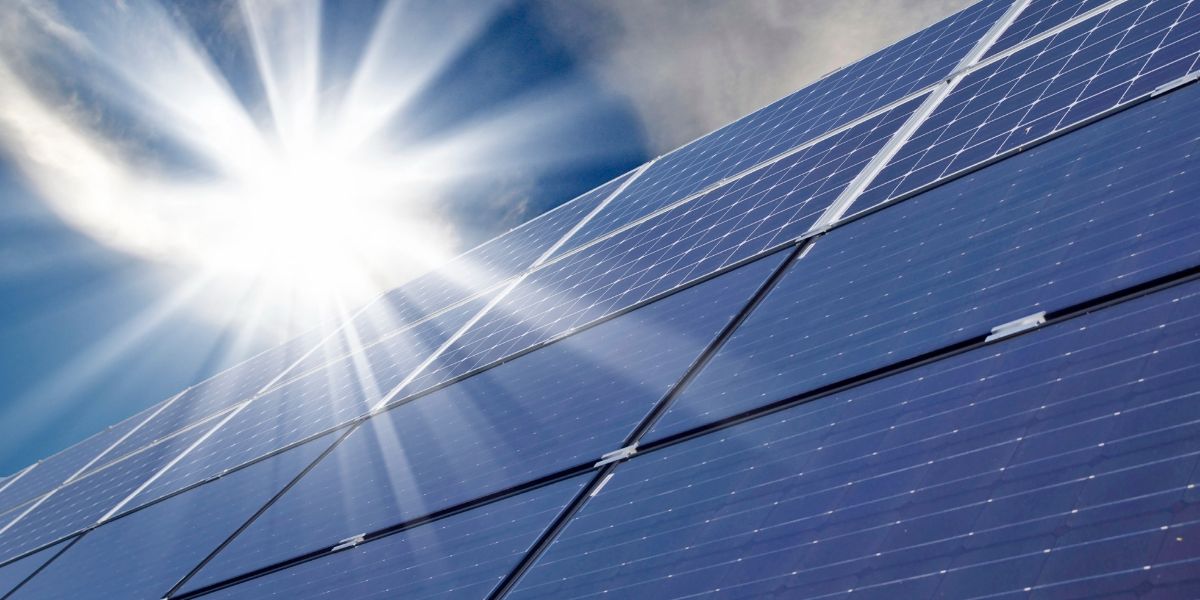
Figure 1: High-voltage solar string power conversion and AI-assisted energy storage management depend on ultra-reliable DC/DC converter modules.

Key Architectural Drivers for Next-Generation Renewable DC/DC Converters:

  • Ultra-Wide Input Range Flexibility: Auxiliary power converters must start up at low irradiance voltages (~150V–200V DC) and maintain steady-state regulation up to peak open-circuit voltage spikes (1500V–1700V DC) under severe winter cold conditions.
  • Galvanic Isolation & Safety Creepage/Clearance: Reinforced isolation rated at 4000VAC or 5600VDC with enlarged PCB clearance distances (>12mm) to meet IEC 62109-1 risk mitigation mandates.
  • Wide Bandgap (WBG) Semiconductor Adoption: Replacing conventional Si MOSFETs with Silicon Carbide (SiC) switches dramatically cuts switching losses, enabling Zero Voltage Switching (ZVS) resonant converter designs operating above 200 kHz.
  • Extreme Environmental Reliability: Encapsulated bricks featuring thermal conductive potting materials to resist thermal shock, moisture ingress, salt spray, and mechanical vibrations in outdoor harsh environments (C4/C5 atmospheric exposure).

2. Product Recommendations & Technical Specifications Matrix

eMergy Tech curates a elite lineup of high-density DC/DC converters specifically engineered for renewable energy OEM design teams. As an authorized Italian technical distributor partnered with leading global power electronics innovators — including Glary Power Technology, Powergood, HVM Technology, VOX Power, YINGJIAO, and Zeasset — we deliver off-the-shelf and modified-standard converters backed by complete engineering documentation.

Ultra-High Voltage Series

PV-150 Ultra-Wide Input Module

  • Input Voltage: 200V DC – 1500V DC
  • Output Power: 45W – 150W Regulated
  • Isolation: 4000VAC / 5600VDC Reinforced
  • Efficiency: Up to 92% Peak
  • Certifications: IEC/EN 62109, UL 1741

Designed specifically for solar PV string tracking controls and central inverter monitoring units requiring direct connection to high-voltage arrays.

Get a Quote
Telecom & BESS Brick

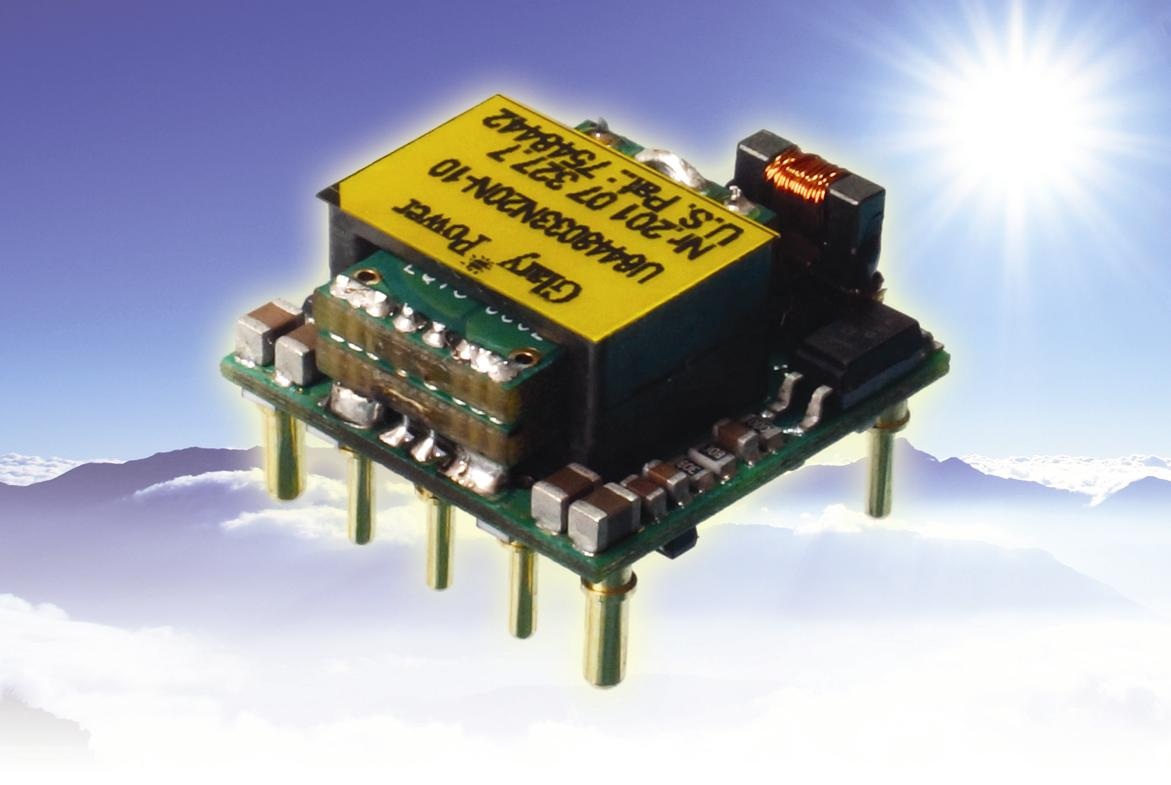
Glary High-Density Half-Brick DC/DC

  • Input Voltage: 36V–75V / 180V–400V DC
  • Output Power: 300W – 800W High Power
  • Cooling: Conduction Baseplate
  • Efficiency: Up to 96.5% (SiC Switching)
  • MTBF: >2.5 Million Hours (MIL-HDBK-217F)

Ideal for 48V telecom rectifiers, battery energy storage system sub-racks, and rugged industrial DC distribution buses.

Get a Quote
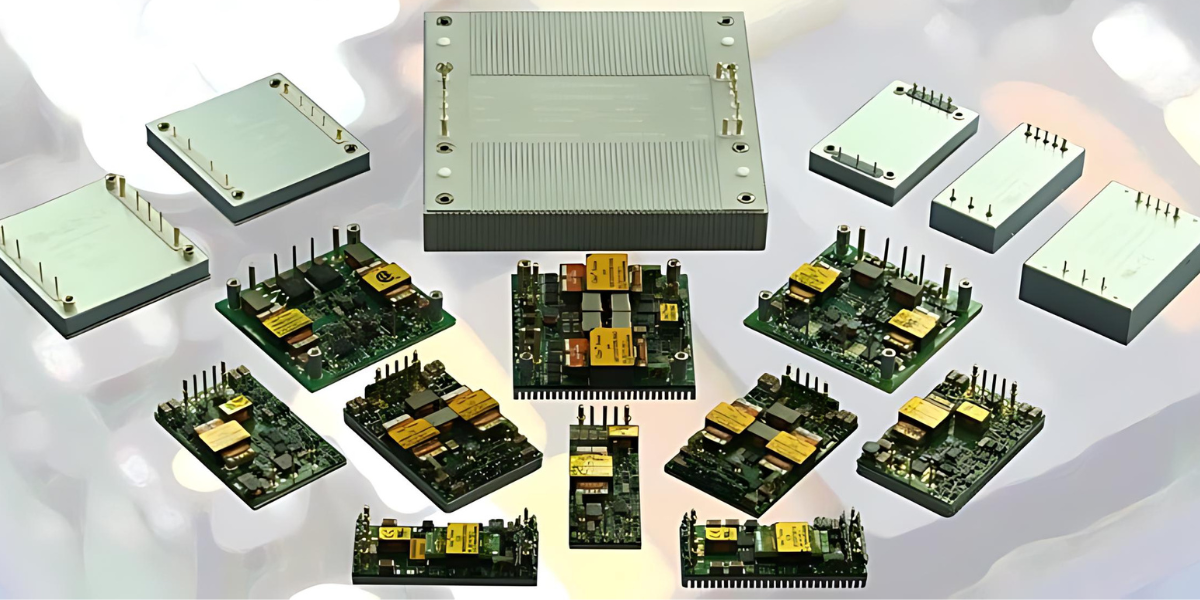
Glary Power Technology High Efficiency DC/DC Converters distributed by eMergy Tech
Figure 2: Industrial high-density DC/DC converters from Glary Power Technology, distributed across Europe by eMergy Tech.

Technical Parameter Comparison: Specialized Renewable Converter Series

The table below illustrates core parameters across our primary renewable energy DC/DC converter product families to streamline your engineering selection process:

Series Family Input Voltage Range Output Power Isolation Voltage Peak Efficiency Primary Application
PV-String Series 150V – 1500V DC 15W – 200W 4000VAC 91.5% Solar PV Array Auxiliary Power, MPPT Units
Glary High-Power Brick 18V – 36V / 36V – 75V 100W – 800W 2250VDC 96.5% Telecom Microgrids, Wind Turbine Yaw Control
Powergood Encapsulated 9V – 36V / 18V – 75V 10W – 150W 3000VAC 93.0% Off-Grid Controllers, Outdoor IoT Energy Sensors
HVM Ultra-HV Series 5V – 28V DC Input 1kV – 10kV Output Up to 15kV 88.0% Electrostatic Precipitators, Specialized PV Testing
BESS Bi-Directional 200V – 900V DC 1kW – 10kW Modules 3500VAC 97.2% Battery Storage Rack Equalization & DC Bus Coupling

3. Future Global Procurement Trends in Renewable Power Electronics

Procurement executives and supply chain managers in the renewable energy sector face complex volatility, regulatory shifts, and technical evolution. Sourcing Renewable Energy DC/DC Converters requires a forward-looking strategy that balances unit acquisition cost against Total Cost of Ownership (TCO), long-term component availability, and carbon footprint accountability.

Power Electronics Inverters Converters Breakdown Guide
Figure 3: Understanding the conversion topology differences between inverters, converters, and transformers is vital for procurement engineering alignment.

Key Procurement Megatrends Shaping 2025–2030 Sourcing Decisions:

1. Sourcing Dual-Use Modular Architectures

To prevent inventory fragmentation, tier-1 OEMs are shifting toward modular DC/DC converter platforms that support wide pin-compatible footprint standards (DOSA/POLA compliant half-brick and quarter-brick standards). Sourcing converters with wide input ranges (e.g., 4:1 or 8:1 ultra-wide ratios) allows purchasing teams to consolidate SKUs across multiple renewable product lines (such as 24V industrial controls, 48V telecom rectifiers, and 110V railway auxiliary panels).

2. Supply Chain Resilience and Lifecycle Longevity (>10 Year Guarantee)

Renewable power plants operate on 20-to-25-year service life expectations. Sourcing commercial-grade converters with standard 3-year component lifespans introduces massive warranty risk. Global procurement managers now demand explicit End-of-Life (EOL) roadmap guarantees, long-life aluminum electrolytic capacitors (such as ZEASSET high-temperature series), and established second-source component equivalency from authorized distributors.

3. Stricter Electromagnetic Compatibility (EMC) & Grid Compliance

As grid operators enforce rigid Power Quality standards (IEEE 519, EN 50160), auxiliary DC/DC converters must not generate high-frequency conducted or radiated switching noise that corrupts sensitive sensor buses (RS485, CAN bus, Ethernet). Modern procurement RFQs specify built-in Class B EN 55032 EMI filter networks and low common-mode capacitance design.

4. Enterprise Strengths & E-E-A-T: Why Partner with eMergy Tech?

When integrating critical power conversion modules into multi-million-euro renewable energy assets, engineering trust and supply chain transparency are paramount. Based in Corsico (Milan), Italy, eMergy Tech has established itself since 2011 as a premier technical distributor and engineering consultancy specializing in industrial power supplies, DC/DC converters, and passive power components.

eMergy Tech Power Supply Technical Advisory Team Milan Italy
Figure 4: eMergy Tech's dedicated technical laboratory in Corsico (Milan), delivering engineering consulting and tailored component selection.

Our Core Competencies for Renewable Energy OEMs:

  • Deep Application Engineering (Experience & Expertise): We do not simply move boxes. Our senior engineers review your electrical schematics, evaluate thermal derating curves, assist with custom pinouts, and perform pre-compliance EMC analysis before system prototyping.
  • Certified Quality & Direct Manufacturer Relationships (Authoritativeness): As authorized Italian distributors for world-class manufacturers (Glary Power Technology, Powergood, VOX Power, Selec, YINGJIAO, Zeasset, Power-Win, HVM Technology), we guarantee 100% genuine factory-fresh components with full traceability and direct factory engineering backing.
  • Over 480+ Satisfied B2B Enterprise Clients (Trustworthiness): Trusted by leading European OEMs across industrial automation, telecommunications, railway, and renewable energy sectors for more than 12 years.
  • Comprehensive Ecosystem Portfolio: Beyond isolated DC/DC converters, we deliver complete power unit bill-of-materials (BOM) including AC/DC modules, custom inductive coils, power transformers, EMI/EMC filters, and long-life electrolytic capacitors.

Need Tailored Technical Guidance for Your Renewable Power Unit?

Speak directly with our Milan-based senior power design engineers. We review your specifications, evaluate thermal requirements, and deliver competitive volume pricing within 24 hours.

Get a Quote

5. Frequently Asked Questions (FAQ) — Global Buyer Technical Knowledge Base

Below are expert responses to the most frequent technical and procurement inquiries raised by engineering teams and global purchasers when specifying Renewable Energy DC/DC Converters.

Q1: How do 1500V DC input ultra-wide range DC/DC converters handle transient overvoltages in solar PV systems?

Ultra-wide input voltage DC/DC converters designed for 1500V DC solar PV arrays integrate multi-level resonant topologies (such as LLC or phase-shifted full-bridge) paired with high-voltage Silicon Carbide (SiC) MOSFETs rated for 1700V to 3300V breakdown limits. They incorporate internal metal-oxide varistors (MOVs), gas discharge tubes (GDTs), and isolated feedback loops capable of withstanding 4000VAC or 5600VDC isolation test voltages, effectively protecting low-voltage control electronics against grid switching surges, lightning-induced transients, and string unloading voltage spikes.

Q2: What are the key technical differences between isolated and non-isolated DC/DC converters in Battery Energy Storage Systems (BESS)?

Galvanic isolation is the primary differentiator. Isolated DC/DC converters utilize high-frequency planar transformers to completely separate the primary high-voltage battery DC bus (ranging from 400V to 1500V) from the secondary control, sensing, and low-voltage communications domain (12V, 24V, or 48V). This isolation prevents ground loops, protects personnel from lethal high-voltage floating potential, and satisfies safety standards such as IEC 62109 and UL 1741. Non-isolated converters offer slightly higher power density and peak efficiency for localized voltage step-down where common ground references are safety-permissible.

Q3: How does thermal derating impact output power delivery in fanless outdoor renewable power enclosures?

In sealed NEMA 4X / IP66 outdoor inverter or BESS cabinets, heat removal relies entirely on conduction and natural convection. High-efficiency DC/DC converters designed with conduction-cooled baseplates (aluminum heatsinks or cold-plate interfaces) maintain 100% full-rated load up to +85°C baseplate temperatures. Standard converters experience sharp thermal derating beyond +50°C ambient, losing 2.5% to 4% power output per degree Celsius. Choosing converters with efficiency >95% reduces internal dissipated power loss (P_loss = P_out * (1-η)/η), minimizing cabinet thermal build-up and preventing unexpected system shutdowns.

Q4: Why are Silicon Carbide (SiC) and Gallium Nitride (GaN) semiconductors replacing legacy Silicon in renewable DC/DC converters?

Wide Bandgap (WBG) semiconductors offer fundamentally superior physical properties: breakdown field strengths up to 10x higher, higher electron saturation velocity, and significantly lower output capacitance (C_oss) and reverse recovery charge (Q_rr). This allows DC/DC converters to operate at switching frequencies from 200 kHz to over 1 MHz with minimal switching losses. The higher frequency reduces the physical size of magnetic components (inductors, transformers) and capacitors by up to 60%, raising volumetric power density above 100W/in³ while lowering total system heat generation.

Q5: What standards are mandatory when sourcing DC/DC converters for grid-tied solar and wind installations?

Mandatory standards include IEC/EN 62109-1 and 62109-2 for solar power converter safety, UL 1741 (and UL 1741 SB for smart grid functionality), EN 61000-6-2/EN 61000-6-4 for heavy industrial Electromagnetic Compatibility (EMC/EMI), and EN 50155 / EN 45545-2 if the renewable installation feeds electrified transport infrastructure. Furthermore, compliance with RoHS and REACH regulations is mandatory for European market entry.

Q6: How does eMergy Tech support custom voltage output and EMI filtering requests for specialized industrial power units?

eMergy Tech provides end-to-end application engineering consultation from our headquarters in Corsico (Milan), Italy. Our senior power engineers perform feasibility assessments, custom pinout matching, thermal simulation reviews, and specialized EMI filter integration (tailored to EN 55032 Class B / CISPR 32 limits). We work directly with our premier manufacturing partners (such as Glary Power, Powergood, HVM Technology, and VOX Power) to deliver modified-standard or fully customized DC/DC converter modules validated through pre-compliance laboratory testing.

Accelerate Your Renewable Power Project Today

Request customized datasheets, evaluation samples, or direct technical consultation with eMergy Tech’s power electronics team.

Get a Quote