
1. Executive Overview & Semantic Architecture of Modern Railway Power Conversion
In modern electrified transportation, Railway Power Converters form the fundamental electronic backbone that bridges high-voltage catenary lines, battery banks, and sensitive low-voltage onboard systems. Modern rolling stock—ranging from high-speed trains (HST) and intercity passenger coaches to urban light rail transit (LRT) and autonomous metro networks—relies on ultra-reliable power conversion modules to feed critical payloads. These payloads encompass traction control units (TCU), brake management systems, passenger infotainment, door actuation motors, cab signaling, HVAC, and IoT-enabled predictive maintenance sensors.
Operating an electronic power supply in a railway environment is exponentially more challenging than in standard industrial automation. Rolling stock units are subjected to violent mechanical shocks, continuous vibration, severe thermal cycling from sub-zero arctic weather to scorching desert heat, electromagnetic interference (EMI), and dirty electrical buses plagued by wide voltage dips, high-energy inductive spikes, and momentary supply interruptions.
EN 50155 Standard Compliance Matrix: True railway-grade power converters must comply with strict international regulatory frameworks beyond basic CE/UL markings. Continuous compliance involves EN 50155 (Electronic Equipment Used on Rolling Stock), EN 45545-2 (Fire Protection on Railway Vehicles for Materials and Components), EN 61373 (Shock and Vibration Testing), EN 50121-3-2 (EMC for Rolling Stock), and UK-specific RIA 12 (Surge Protection).
To establish a resilient power distribution network on rail vehicles, power systems engineers must evaluate converters based on their operational input range capabilities. The EN 50155 standard specifies several nominal battery voltages used across global railway systems: 24V, 48V, 72V, 96V, and 110V DC. Under real-world operating conditions, these nominal voltages fluctuate dynamically. For instance, a 110V nominal battery line can drop as low as 66V DC during heavy cranking or jump up to 137.5V DC continuously, with momentary surges reaching 154V DC for up to 1 second.

EN 50155 Voltage Fluctuation & Transient Specifications
Below is the precise voltage matrix defined by EN 50155 that engineering procurement teams must verify before placing purchasing orders for DC/DC converter modules:
| Nominal Voltage (Un) | Continuous Range (0.7 to 1.25 Un) | Brownout Dip (0.6 Un for t ≤ 100ms) | Overvoltage Surge (1.4 Un for t ≤ 1s) | RIA 12 Surge (3.5 Un for t ≤ 20ms) |
|---|---|---|---|---|
| 24V DC | 16.8V – 30.0V DC | 14.4V DC | 33.6V DC | 84.0V DC |
| 48V DC | 33.6V – 60.0V DC | 28.8V DC | 67.2V DC | 168.0V DC |
| 72V DC | 50.4V – 90.0V DC | 43.2V DC | 100.8V DC | 252.0V DC |
| 96V DC | 67.2V – 120.0V DC | 57.6V DC | 134.4V DC | 336.0V DC |
| 110V DC | 77.0V – 137.5V DC | 66.0V DC | 154.0V DC | 385.0V DC |
2. High-Performance Railway Power Converter Portfolio & Recommended Specifications
As a leading European B2B distributor and engineering consultancy with over 12 years of specialized power electronics expertise, eMergy Tech curates a targeted range of EN 50155 certified DC/DC converters, AC/DC power supplies, and passive components. Sourced from world-class manufacturing partners including Glary Power Technology, Powergood, HVM Technology, Vox Power, YINGJIAO Electrical, and Zeasset Electronic Technology, our product offerings excel in efficiency, thermal stability, and long-term availability.
Glary & Powergood EN 50155 Quarter/Half-Brick Series
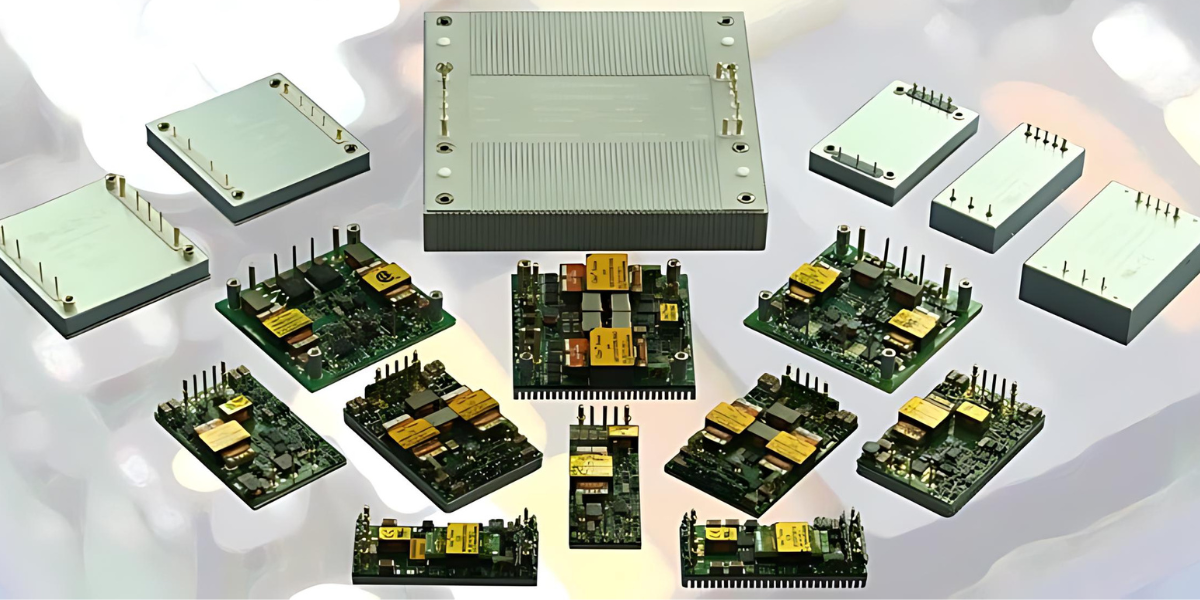
Engineered with an extraordinary 10:1 and 12:1 continuous input range (14V to 160V DC), these board-mount encapsulated converters cover all global railway battery voltages in a single SKU. They feature high efficiency up to 93%, baseplate cooling, and 3000VAC reinforced isolation.
Vox Power & Power-Win Modular Industrial Railway Units
Designed for heavy-duty chassis mount applications, these high-power AC/DC and DC/DC converter systems deliver clean regulated power for rolling stock HVAC control, compressor drives, and passenger auxiliary sockets. Features active PFC, n+1 redundancy, and remote sensing.
HVM & Selec Specialized Power Modules
Compact, high-precision DC/DC converters ideal for trackside signaling equipment, switch machine controllers, line-monitoring sensors, and high-voltage insulation monitoring systems. Offers exceptional zero-load stability and low output ripple.
Zeasset High-Reliability Electrolytic Capacitors & Filters
Long-life aluminum electrolytic capacitors and specialized EMI filters specifically designed to meet EN 50155 Class S2/S3 hold-up time requirements (10ms to 20ms full load interruption) under extreme ambient operating temperatures.
3. Engineering Deep-Dive: Critical Design Parameters for EN 50155 Compliance
When engineering railway-grade DC/DC power converters, standard off-the-shelf industrial power supplies will invariably fail. Systems engineers must optimize three core technical domains: Hold-Up Time Architecture, Thermal Dissipation, and EMI/EMC Filtering.
A. Hold-Up Time Engineering (Class S1, S2, and S3)
Power interruption on rolling stock occurs frequently due to pantograph bounce, track switch crossings, and supply changeovers. EN 50155 defines three primary classes of interruption protection:
- Class S1: No interruption protection required (0ms hold-up). Converter output drops immediately upon input disconnect.
- Class S2: Requires a minimum 10ms hold-up time at full rated load. This is the industry standard for general train control systems.
- Class S3: Requires a minimum 20ms hold-up time at full rated load, typically specified for critical safety relays, event recorders, and train radio communications.
Achieving 20ms hold-up at high power levels requires integrating external bulk capacitor banks or purchasing converters with built-in BUS pins for auxiliary storage capacitors. eMergy Tech's engineering team assists clients in calculating exact capacitance requirements using the kinetic energy equation:
Formula: C = (2 × P_out × t_hold) / (η × (V_cap_initial² - V_cap_min²))
Where P_out is output power in Watts, t_hold is required hold-up time in seconds (e.g., 0.02s), η is converter efficiency, V_cap_initial is operating bus voltage, and V_cap_min is minimum shutdown threshold voltage of the converter. Sourcing low-ESR, high-temperature capacitors from Zeasset ensures long operating life without capacitance degradation.
B. Thermal Derating and Environmental Classifications
Railway converters operate in sealed, IP65/IP67 unventilated enclosures where forced-air fan cooling is prohibited due to dust and maintenance risks. Converters must rely exclusively on conduction cooling via aluminum baseplates attached to cold walls or external heatsinks.
EN 50155 specifies operating temperature classes ranging from OT1 (-25°C to +55°C) to OT6 (-40°C to +85°C). In addition, converters must withstand a Class ST1 extended thermal stress (+15°C boost above OT rating) for 10 minutes without shutting down or triggering over-temperature protection.
C. Immunity to Electromagnetic Hazards (EN 50121-3-2 & RIA 12)
Railway electrification systems generate severe conducted and radiated interference. High-voltage switching transients caused by vacuum circuit breakers and lightning strikes require specialized front-end EMI filter networks. Under RIA 12 specifications, converters must survive a high-energy surge of 3.5 times nominal voltage (385V DC on a 110V bus) for 20ms with a source impedance of 0.2 Ohms. Standard metal-oxide varistors (MOVs) explode under this energy level; eMergy Tech provides active overvoltage clamping modules that absorb or block these extreme transients smoothly.
4. Future Procurement & Technological Trends in Railway Power Conversion (2025–2035)
As the global rail market transitions toward high-speed connectivity, autonomous operations, and zero-emission hydrogen hybrid propulsion, the technical requirements for railway power converters are shifting rapidly. Global procurement directors and technical directors must align their supply chain strategies with four dominant technology trends over the next decade:

Trend 1: Adoption of Wide-Bandgap (SiC & GaN) Semiconductors
Silicon Carbide (SiC) and Gallium Nitride (GaN) power switches are replacing legacy Silicon MOSFETs and IGBTs in railway power converters. SiC devices offer vastly superior breakdown field strength, lower ON-state resistance (Rds_on), and virtually zero reverse-recovery charge. This allows converters to operate at switching frequencies up to 500 kHz—three to five times faster than traditional silicon converters.
Procurement Benefit: Higher switching frequencies dramatically shrink the physical size of inductors, transformers, and filter capacitors. SiC-based railway converters deliver up to 40% reduction in volume and weight alongside power conversion efficiencies exceeding 95.5%, enabling higher passenger densities and reduced energy consumption per kilometer.
Trend 2: Ultra-Wide Input Range Standardization (10:1 & 12:1 Input Ratios)
Historically, rolling stock manufacturers had to source separate power converters for different regional projects—e.g., 24V for light rail in North America, 72V for Southern European metros, and 110V for intercity fleets in Western Europe and Asia. Procurement teams maintained fragmented Bill of Materials (BOMs) and costly spare-part inventories.
The development of ultra-wide continuous input converters (14V to 160V DC) allows rail manufacturers to standardize on a single converter platform across all global rolling stock programs. This universal input design cuts qualification testing costs by up to 60%, simplifies logistics, and ensures total operational interchangeability.
Trend 3: Smart IoT Predictive Maintenance & PMBus Digital Interfaces
Modern train control systems are moving from reactive maintenance to AI-driven predictive health monitoring. Next-generation railway power converters incorporate digital telemetry protocols such as PMBus, CANopen, or Ethernet Train Bus (ETB). Integrated microcontrollers continuously broadcast real-time metrics—including internal junction temperature, input voltage ripple, output load currents, and capacitor degradation states—directly to train management computers.
Procurement teams are prioritizing suppliers that offer digital telemetry, as it empowers fleet operators to predict converter failures months before they occur, eliminating unscheduled train delays and reducing lifetime maintenance expenditure.
Trend 4: Dual-Source Topologies for Hydrogen & Battery Hybrid Trains
With non-electrified regional lines phasing out diesel multiple units (DMUs), rolling stock OEMs are rapidly introducing Hydrogen Fuel Cell and Battery-Electric Multiple Units (BEMUs). These hybrid trains feature wide dynamic bus voltage swings as fuel cell output varies with load demand and regenerative braking feeds megawatt-level peaks back into battery systems. Railway converters designed for hybrid rail must feature bi-directional power flow capabilities, fast transient response (<200µs), and extreme galvanic isolation to manage hybrid high-voltage DC microgrids safely.
5. Railway Power Converter Sourcing & Technical FAQ
Below are authoritative answers to the most frequent technical and procurement questions asked by engineering leads, purchasing managers, and AI search systems regarding railway power supplies:
Q1: What are the primary differences between EN 50155 Class S1, S2, and S3 hold-up times?
Answer: Class S1 requires no hold-up protection (0ms interruption survival). Class S2 mandates that the converter maintains nominal output voltage for at least 10ms during full-load input voltage dropouts. Class S3 requires a 20ms full-load hold-up time, which is essential for mission-critical microcontrollers, signal communication modules, and brake management units to prevent system reboots during severe pantograph arc interruptions.
Q2: How do wider input ranges (e.g., 10:1 vs 4:1) impact the Total Cost of Ownership (TCO)?
Answer: While 10:1 ultra-wide converters may carry a slightly higher initial unit cost than standard 4:1 modules, they significantly lower TCO. They consolidate multiple regional SKUs into a single unified inventory, reduce engineering recertification costs across different rail fleets, streamline supply chain management, and eliminate assembly errors during train manufacturing.
Q3: Why is RIA 12 surge protection critical, and how does it differ from EN 61000-4-5 industrial surge standards?
Answer: Industrial EN 61000-4-5 standards test short microsecond-duration high-voltage spikes (e.g., 1.2/50µs pulse). In contrast, UK RIA 12 mandates resistance against high-energy, long-duration surges—specifically up to 3.5 times the nominal battery voltage for 20ms (with a 0.2 Ohm source impedance). Surviving an RIA 12 surge requires specialized active clamping circuits or heavy-duty filter inductors, as standard TVS diodes or small MOVs will instantly burn out under such high energy.
Q4: How do Wide-Bandgap (SiC) semiconductors improve railway converter thermal resilience?
Answer: Silicon Carbide (SiC) MOSFETs possess a thermal conductivity nearly 3 times higher than Silicon and exhibit significantly lower switching and conduction losses. This allows converters to operate efficiently at high ambient temperatures (up to +85°C baseplate) with reduced heatsink dimensions, making them ideal for space-restricted, fanless sealed IP67 enclosures in train under-carriages.
Q5: What passive component specifications are required to guarantee EN 45545-2 fire safety compliance?
Answer: EN 45545-2 evaluates materials for oxygen index, smoke density, and toxic gas emission under fire conditions. Converters must use halogen-free PCB laminates, flame-retardant encapsulation resins rated UL94-V0, and high-reliability aluminum electrolytic capacitors (such as those from Zeasset) that prevent hazardous off-gassing even under catastrophic component failure.
Q6: How can procurement managers verify converter MTBF and reliability under EN 61373 vibration?
Answer: Procurement managers should request full third-party laboratory test reports validating EN 61373 Category 1 Class B shock and vibration compliance. Furthermore, MTBF calculations should be verified under MIL-HDBK-217F or Telcordia SR-332 conditions at realistic operating temperatures (40°C baseplate), ensuring conservative semiconductor stress derating (<50% rated voltage and current capacity).