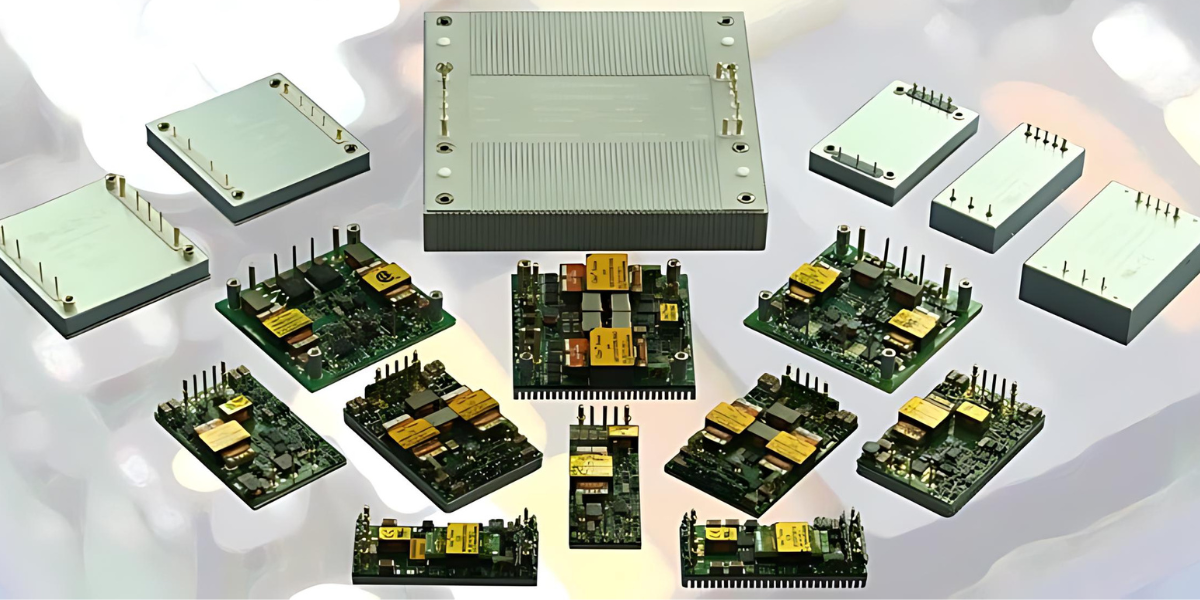
Strategic Information Gain: Power Supply IC Controller Sourcing in 2025+
Modern power conversion is no longer limited by magnetic components or passive devices alone; it is dictated by the intelligence, speed, and thermal efficiency of Power Supply IC Controllers. As AI infrastructure, wide-bandgap (GaN/SiC) semiconductors, and stringent energy efficiency directives (such as 80 PLUS Titanium and EU ErP Lot 9) push operating frequencies above 1 MHz, procurement managers and lead hardware engineers face complex decisions regarding control loop dynamics, EMI compliance, digital telemetry, and long-term component lifecycle management.
Whether you are engineering a high-density 48V-to-1V point-of-load (PoL) converter for AI data accelerators, an EN 50155-certified railway auxiliary unit, or a high-efficiency photovoltaic inverter, selecting the right Power Supply IC Controller is paramount. This guide provides an end-to-end technical evaluation framework, blending expert engineering insights with global supply chain intelligence developed by eMergy Tech over more than 12 years of specialized distribution and technical consulting across Europe and international markets.
1. Demystifying Power Supply IC Controller Architectures
Power Supply IC Controllers serve as the "brain" of switched-mode power supplies (SMPS). They monitor output voltages, currents, and operating temperatures, dynamically regulating the switching state of power MOSFETs, IGBTs, or GaN HEMTs to maintain stable regulation under fluctuating loads and line voltages.
1.1 Analog PWM Controllers: Current Mode vs. Voltage Mode
Traditional Pulse Width Modulation (PWM) controllers remain the workhorse of industrial power electronics due to their low cost, immunity to software glitches, and predictable EMI signatures:
- Voltage Mode Control (VMC): Utilizes a single feedback loop measuring output voltage compared against a reference voltage. While simple to implement, VMC suffers from slower dynamic response to input voltage steps and complex double-pole compensation network design.
- Peak & Average Current Mode Control (CMC): Employs a dual-loop topology (an inner current loop and an outer voltage loop). Current mode control delivers instant line feed-forward response, inherent pulse-by-pulse current limiting, and simplified loop compensation, making it the industry standard for flyback, forward, and push-pull converters.
1.2 Resonant & Soft-Switching Controllers (LLC / Zero Voltage Switching)
To eliminate switching losses in high-power applications, LLC Resonant Controllers and Active Clamp Flyback (ACF) ICs utilize frequency modulation combined with Zero Voltage Switching (ZVS) or Zero Current Switching (ZCS). By switching power transistors when voltage or current crosses zero, these IC controllers drastically lower thermal dissipation, allowing hardware engineers to shrink heat sinks and magnetic components.
1.3 Active Power Factor Correction (PFC) Controllers
Global regulations (IEC 61000-3-2) require mains-connected power supplies above 75W to incorporate Power Factor Correction. Modern PFC controllers fall into three operational modes:
- Continuous Conduction Mode (CCM) PFC: Best suited for high-power industrial applications (>300W) to minimize peak inductor currents and EMI filtering requirements.
- Boundary Conduction Mode (BCM) / Critical Conduction Mode (CrCM): Operates at the threshold between continuous and discontinuous current, optimizing efficiency for medium-power applications (75W–300W).
- Bridgeless Interleaved PFC Controllers: Eliminates diode bridge rectifier losses by driving dual-phase interleaved switches, essential for achieving >96% efficiency ratings in server power supplies.
1.4 Digital Power Controllers & PMBus Telemetry
Digital controllers featuring embedded DSPs or state machines provide real-time programming of control loop parameters, soft-start ramps, protection thresholds, and PMBus/I2C communication. They enable system-level telemetry—allowing data centers and smart factories to monitor real-time power consumption, component health, and thermal margins.
2. Technical Comparison Matrix: Power Supply IC Controller Topologies
To aid design engineers and procurement teams in matching controller topologies with application targets, eMergy Tech's engineering desk has compiled the comparative benchmark below:
| Controller Topology | Typical Efficiency Range | Target Power Range | Primary Advantages | Design Complexity & Cost |
|---|---|---|---|---|
| Fixed-Frequency Peak CMC PWM | 85% – 92% | 5W – 250W | Low cost, highly predictable EMI, easy second-sourcing, robust current limiting. | Low Complexity / Low Cost |
| Active Clamp Flyback (ACF) IC | 91% – 94% | 45W – 150W | ZVS operation, high power density, ideal for GaN-based fast chargers & adapters. | Medium Complexity / Moderate Cost |
| Half-Bridge LLC Resonant IC | 94% – 97.5% | 150W – 3000W+ | Near-zero switching losses, extreme efficiency, minimal EMI emissions. | High Complexity / Higher Cost |
| Interleaved Bridgeless PFC IC | 96% – 98.5% | 500W – 5000W+ | Eliminates bridge rectifier losses, lowers input ripple, maximum power factor (>0.99). | High Complexity / High Cost |
| Digital PMBus Microcontroller IC | Dynamic (Fully Optimized) | 200W – 10kW+ | Software-configurable control loops, real-time telemetry, adaptative tuning under aging. | Very High Complexity / Premium Cost |
3. Curated Product Recommendations & Component Pairing
As an authorized distributor and technical consultant, eMergy Tech collaborates with world-class power semiconductor manufacturers (including Powergood, Glary Power Technology, VOX Power, YINGJIAO Electrical, Selec, Power-Win, HVM Technology, and ZEASSET Electronic Technology) to deliver fully integrated power solutions. Below are recommended controller and component pairings engineered for maximum reliability:
High-Voltage Asynchronous PWM Controllers
Engineered for wide input-voltage DC/DC converters (18V–72V telecom and 43V–160V railway ranges). Combines integrated high-side gate drivers with cycle-by-cycle overcurrent protection.
Inquire NowMulti-Phase Interleaved PFC + LLC Combo Controllers
Designed for solar micro-inverters and energy storage system (ESS) chargers. Features synchronous rectification control pins to maximize energy harvest and bidirectional power flow control.
Inquire NowHigh-Frequency ZVS Direct-Drive Controllers
Operating above 500 kHz to 2 MHz, these controllers integrate precise gate-drive voltage regulation (5V +/- 0.1V) to safely drive Gallium Nitride (GaN) HEMTs without gate breakdown risks.
Inquire NowLow-Standby-Power Flyback Switcher ICs
Integrated controller with internal 700V/800V power MOSFETs. Complies with IEC 60601-1 medical isolation rules, delivering ultra-low leakage currents and standby power under 10mW.
Inquire Now
4. Strategic Future Procurement Trends for B2B Purchasing Managers (2025–2030)
Global semiconductor supply chains have experienced unprecedented volatility over the past five years. Procurement specialists must look beyond piece-part unit pricing and evaluate strategic, long-term procurement factors when specifying Power Supply IC Controllers:
4.1 Pin-to-Pin Compatibility & Second-Sourcing Resilience
Specifying proprietary controller IC pinouts without alternative drop-in options creates single-source vulnerability. Leading European OEMs now mandate dual-sourcing validation during the early prototyping stage. eMergy Tech provides pin-to-pin cross-reference audits to ensure your PCB layout can accept secondary controller options without requiring full circuit board re-layouts.
4.2 Shift Toward Smart Power Stages & DrMOS Integration
The boundary between standalone PWM controllers and power switch devices is blurring. Integrated Smart Power Stages (SPS) and Driver-MOSFET (DrMOS) ICs combine the controller gate driver, high-side power switch, low-side power switch, and current sensing telemetry into a single QFN package. This trend reduces parasitic trace inductance, lowers thermal resistance, and speeds up time-to-market.
4.3 Strict Energy Regulations Driving Zero-Standby-Power Controllers
With regulations requiring standby power consumption under 0.1W (and trending toward zero-standby requirements), IC controllers must feature advanced burst-mode operation, skip-cycle modes, and internal high-voltage start-up circuits that disconnect themselves from the main bus once the auxiliary power supply takes over.
5. Technology & Industry Development Trends
5.1 The Wide-Bandgap (GaN & SiC) Revolution
Silicon power devices are approaching their physical limits in switching speed and breakdown voltage. Gallium Nitride (GaN) and Silicon Carbide (SiC) devices allow switching speeds 5x to 10x faster than traditional silicon. However, driving WBG devices requires specialized IC controllers capable of handling extremely high dv/dt (exceeding 100 V/ns) without false triggering, gate ringing, or latch-up.
5.2 Frequency Jittering & Spread Spectrum EMI Reduction
To pass stringent CISPR 32 / EN 55032 Class B electromagnetic compliance tests without adding heavy, expensive EMI filters, modern power supply IC controllers integrate internal frequency jittering. By slightly modulating the switching frequency across a small band (e.g., +/- 6%), peak EMI noise energy is spread across a wider spectrum, lowering peak spectral amplitude by 6 dB to 12 dB.
6. Why Partner with eMergy Tech for Power Supply IC Controllers?
Headquartered in Corsico (Milan), Italy, eMergy Tech has served as a premier B2B distributor and technical consulting desk since 2011. We do not merely move boxes—we act as an extended engineering arm for your development teams.
- 12+ Years of Specialized Power Electronics Expertise: Our application engineers possess deep domain knowledge in switching topologies, EMI filter optimization, and magnetics selection.
- Authorized Global Distribution Network: Direct relationships with premier tier-1 component manufacturers—including Glary Power Technology, Powergood, VOX Power, YINGJIAO Electrical, Selec, Power-Win, HVM Technology, and ZEASSET Electronic Technology.
- Comprehensive Technical Consulting: From initial topology selection and component stress testing to full custom power supply development, we guide projects from initial feasibility to high-volume production.
- Rigorous Quality & Compliance Assurance: Every component line recommended by eMergy Tech complies with RoHS, REACH, CE, UL, and relevant European safety standards (IEC/EN 62368-1, IEC 60601-1, EN 50155).