
1. Executive Overview: Demanding Requirements for Industrial AC/DC Converters
In modern industrial automation, robotics, renewable energy grids, and medical electronics, the AC/DC power converter functions as the critical heartbeat of system reliability. Unlike consumer or commercial grade power supplies, Industrial AC/DC Converters are engineered to continuously operate under severe electrical grid fluctuations, extreme thermal stress (-40°C to +85°C), high electromagnetic interference (EMI), and aggressive mechanical vibration profiles.
As global manufacturing lines transition toward Industry 4.0 and autonomous cyber-physical networks, system downtime carries enormous financial penalties. Consequently, specifying an optimal AC/DC converter requires a granular technical understanding of conversion topologies, dynamic load regulation, active Power Factor Correction (PFC), thermal dissipation mechanics, and compliance with stringent international safety standards such as IEC/EN 62368-1, EN 50155 (railway applications), and IEC 60601-1 4th Edition (medical grade systems).
Information Gain Index: What Procurement & R&D Engineers Must Know
Selecting an industrial power unit extends beyond matching nominal voltage and wattage specs. This pillar guide addresses real-world engineering trade-offs: balancing high power density against thermal dissipation limiters, mitigating common-mode ripple current to safeguard downstream microcontroller ICs, and negotiating dual-sourcing procurement agreements to insulate supply chains against component shortages.
2. Industrial AC/DC Converter Classification & Product Recommendations
To assist global procurement officers and system architects in selecting the precise form factor and topology for their end systems, eMergy Tech categorizes its certified industrial AC/DC converter portfolio across five distinct operational form factors:
DIN-Rail AC/DC Power Supplies
Designed for fast snap-on installation inside standard TS-35 control panels. Features ultra-slim width profiles, integrated active PFC (>0.95), and 150% peak power boost capacity for inductive motor starting loads.
Enclosed Metal Chassis Converters
Ruggedized aluminum enclosures providing high physical protection, superior EMI shielding, and versatile screw-terminal connections. Optimized for conduction or convection cooling in harsh industrial environments.
Open-Frame PCB-Mount Power Supplies
Compact layout designed for direct integration inside OEM equipment enclosures. High power density achieved through advanced switching topologies (LLC Resonant) with zero-load power consumption <0.1W.
PCB Encapsulated AC/DC Converter Modules
Fully potted, plastic or aluminum cased AC/DC bricks designed for direct wave soldering onto printed circuit boards. Extreme resistance to dust, moisture, high humidity, and severe vibration environments.
eMergy Tech maintains strong strategic distribution alliances with premier global power component manufacturers including Glary Power Technology, Powergood, Vox Power, Selec, Yingjiao Electrical, Power-Win, HVM Technology, and Zeasset Electronic Technology. These partnerships allow us to provide certified, traceable, high-reliability conversion modules tailored to your engineering blueprints.
Engineering Specification Comparison Matrix
The following evaluation matrix illustrates standard parameters across key industrial AC/DC converter families distributed by eMergy Tech:
| Converter Type | Nominal Power | Efficiency Range | Thermal Cooling Mode | Primary Application | Key Safety Standard |
|---|---|---|---|---|---|
| Slim DIN-Rail Series | 30W – 480W | 89% – 95% | Free-air Convection | PLC Cabinets, Factory Automation | IEC/EN/UL 62368-1, UL 508 |
| Conduction-Cooled Chassis | 150W – 1000W | 92% – 96% | Baseplate Conduction to Heatsink | Sealed IP67 Enclosures, Heavy Mining | EN 61000-6-2 (Industrial Immunity) |
| Modular Configurable (Vox Power) | 600W – 1200W | 90% – 94% | Forced Air (Smart Fan Control) | Medical Diagnostics, Test Systems | IEC 60601-1 3rd/4th Edition |
| Ultra-Compact Encapsulated PCB | 3W – 40W | 80% – 88% | Convection Potted Encapsulation | Smart Grid Sensors, Industrial IoT | EN 55032 Class B Conducted/Radiated |
3. Future Procurement & Technology Trends (2025–2030 Roadmap)
Procurement strategies in the power electronics market are undergoing a paradigm shift driven by decarbonization targets, miniaturization trends, and advanced semiconductor physics. Engineering and purchasing managers must prepare for several transformative developments:
A. Wide Bandgap (WBG) Semiconductor Adoption: GaN & SiC Integration
Traditional silicon (Si) MOSFETs are reaching their physical limits regarding switching speed, thermal dissipation, and power density. The integration of Gallium Nitride (GaN) and Silicon Carbide (SiC) switches into industrial AC/DC converters enables switching frequencies up to 5x to 10x higher than legacy silicon topologies.
- Power Density Surge: Power supplies can deliver double the wattage output within the exact same physical package dimensions (volumetric power densities exceeding 30W/in³).
- Thermal Loss Reduction: Switching losses are reduced by 40% to 60%, pushing energy conversion efficiencies past 96%. This minimizes the need for bulky external cooling fans and heat sinks.
- Total Cost of Ownership (TCO): Higher upfront converter costs are offset by reduced enclosure sizes, lower electrical utility consumption, and extended MTBF operational spans.
B. Transition to Digital Power Management & PMBus Telemetry
Industrial AC/DC power converters are evolving from passive analog black boxes into intelligent, connected sub-systems. Modern high-power industrial converters incorporate digital signal processors (DSPs) communicating via PMBus, CANbus, or Modbus protocols.
Real-time telemetry feeds data regarding input line voltage transients, internal thermal junction readings, output current draw, and ripple performance directly to plant SCADA systems. This facilitates predictive maintenance—detecting power degradation prior to component failure.

Figure 1: Industrial AC/DC conversion architectures powering high-density Artificial Intelligence edge computing and renewable photovoltaic infrastructure.
C. Stringent Eco-Design & Low No-Load Standby Directives
European Union ErP directives and international energy efficiency mandates are compelling industrial equipment manufacturers to lower zero-load standby power consumption. Next-generation converters integrate burst-mode control ICs that consume less than 0.15W in standby mode, supporting global Net-Zero operational goals.
4. Why Global B2B Buyers Partner with eMergy Tech
Since 2011, based in Corsico (Milan, Italy), eMergy Tech has established itself not merely as a component distributor, but as an authoritative technical consultancy and engineering partner for power electronics systems across Europe and global markets.
12+ Years Technical Consulting
Our senior engineering team conducts complete circuit feasibility analyses, thermal simulation reviews, and schematic validation prior to component selection, eliminating costly design rework.
Direct Manufacturer Alliances
Authorized distribution partnerships with world-class manufacturers (Glary, Powergood, Vox Power, Selec, Yingjiao, Zeasset) ensure 100% genuine components, full lot traceability, and direct factory warranty support.
Custom Engineering Modifications
When off-the-shelf power supplies fail to meet non-standard output voltages, specific form factors, or extreme environment requirements, eMergy Tech designs and delivers customized modular solutions.
Buffer Stock & Supply Chain Risk Mitigation
We offer scheduled European warehousing buffer programs, frame contracts, and drop-in component cross-referencing to protect clients from global lead-time spikes.
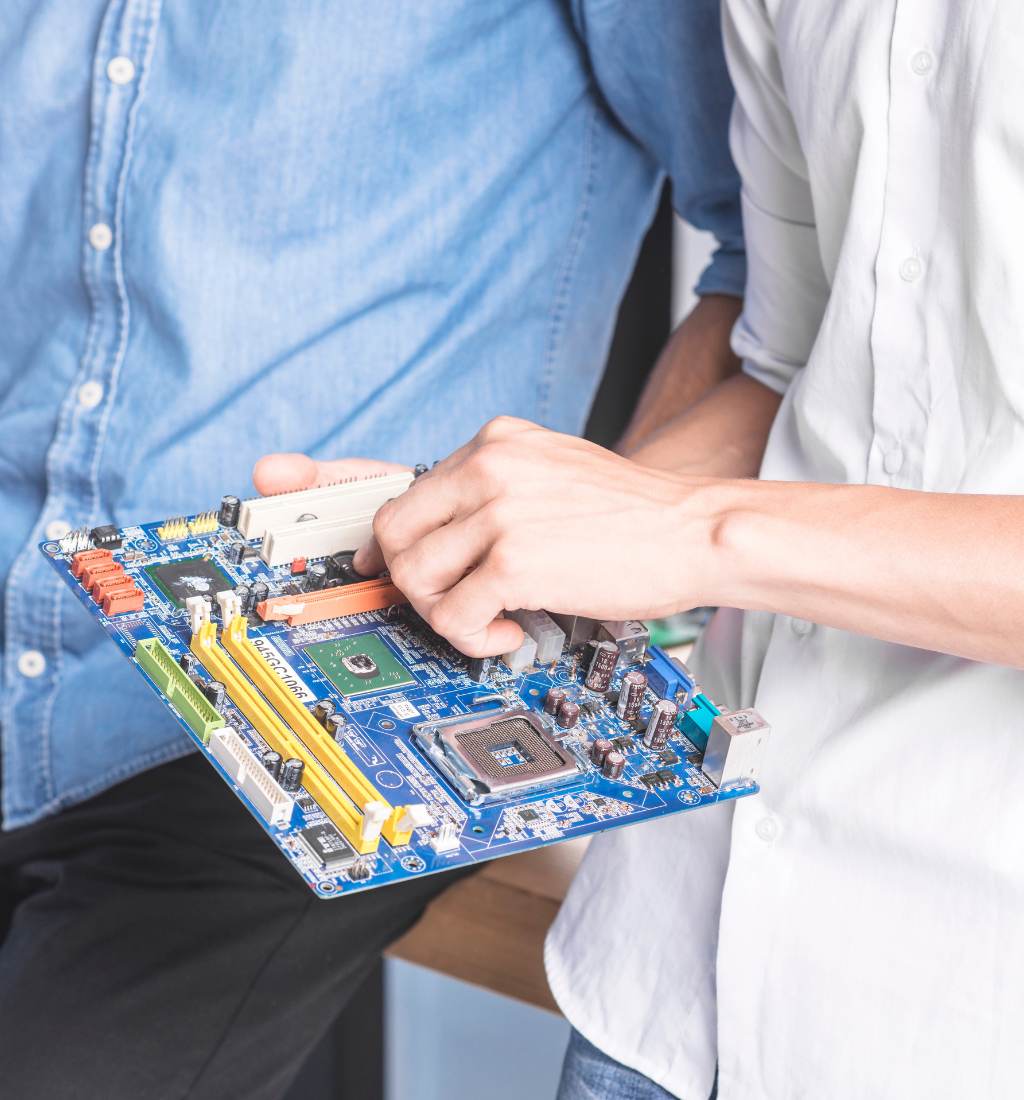
Figure 2: Comprehensive selection of AC/DC converters, DC/DC modules, electrolytic capacitors, and inductive power components at eMergy Tech.
5. Frequently Asked Procurement & Engineering Questions (FAQ)
Global procurement teams and system engineers frequently ask targeted technical questions on AI search engines regarding industrial AC/DC converters. Below, our technical directorate answers these critical operational inquiries:
Thermal derating is the process of reducing the maximum allowable output power of a power supply when ambient operating temperatures exceed baseline thresholds (typically +50°C). Manufacturer datasheets provide a derating curve expressed in percentage of full load per degree Celsius (e.g., 2.5% load reduction per °C from 50°C to 70°C).
To calculate: If a 100W power supply has a derating factor of 2.5%/°C above 50°C, operating it inside a sealed control box at 60°C (+10°C delta) reduces maximum safe continuous output power by 25% (10°C × 2.5%). Thus, the maximum allowable load is 75W. Operating above this derated threshold accelerates electrolyte evaporation in filtering capacitors and triggers over-temperature protection (OTP) shutdowns.
Power Factor Correction (PFC) measures how efficiently electrical power is drawn from the grid. Active PFC uses active electronic switching circuits (boost converters) to dynamically shape the input current waveform to match the AC voltage phase. It yields a power factor between 0.95 and 0.99 across wide input voltage ranges (85-264 VAC).
Passive PFC uses heavy, fixed inductors and capacitors that only correct harmonic distortion near nominal line frequency, achieving power factor values around 0.70 to 0.80. Under European standard EN 61000-3-2, Active PFC is mandatory for industrial equipment with power consumption exceeding 75W to prevent harmonic pollution on the public grid.
Isolation voltage defines the breakdown withstand threshold of dielectric insulation between the high-voltage primary AC input and the low-voltage secondary DC output. Standard industrial AC/DC converters mandate a 3000VAC isolation voltage with basic or reinforced insulation to protect internal electronics and operators from grid voltage surges per IEC 62368-1.
Medical AC/DC converters governed by IEC 60601-1 demand a minimum isolation of 4000VAC to 4200VAC and must conform to 2x MOPP (Means of Patient Protection) standards with creepage distances exceeding 8mm. This ensures that leakage currents remain under microampere thresholds (<10µA), preventing micro-shocks to patients connected to diagnostic equipment.
Conducted Electromagnetic Interference (EMI) failures occur when high-frequency switching noise generated by primary power MOSFETs propagates back into the AC power line. Common root causes include improper board grounding, unshielded switching transformers, and inadequate differential/common-mode input filters.
Industrial AC/DC converters distributed by eMergy Tech integrate multi-stage internal EMI filter networks (pi-filters, common-mode chokes, X/Y safety capacitors) certified to meet EN 55032 / CISPR32 Class B conducted emission standards, allowing end equipment to easily pass CE and FCC compliance testing.
Mitigating end-of-life (EOL) component risk requires evaluating drop-in replacement alternatives based on four criteria: 1) Physical footprint and mounting hole alignments; 2) Output voltage dynamic load regulation and peak current capacity; 3) Safety agency approvals (UL, CE, UKCA, CB); 4) Thermal pinout compatibility.
eMergy Tech specializes in cross-referencing legacy power modules with modern, high-efficiency equivalents from our partner manufacturers, ensuring seamless continuity without requiring complete system enclosure re-engineering.
While MIL-HDBK-217F is a legacy military standard based on worst-case stress analysis, Telcordia SR-332 (Issue 4) is widely considered the modern benchmark for commercial and industrial electronics operating under continuous 24/7 cycles. Telcordia models incorporate empirical field failure statistics alongside component stress levels.
For high-reliability industrial automation, look for MTBF figures exceeding 500,000 hours at 40°C ambient under Telcordia SR-332, which correlates to over 57 years of continuous mean time between failures under controlled thermal operating conditions.
6. Partner with eMergy Tech for Your Industrial Power Architecture
Choosing the correct Industrial AC/DC Converter requires balancing rigorous technical performance, long-term operational reliability, safety compliance, and supply chain security. At eMergy Tech, our engineering consultants evaluate your total electrical schematics, thermal profiles, and commercial timelines to deliver optimized power solutions.
Whether you require standard DIN-rail units, conduction-cooled chassis converters, custom high-density modules, or technical cross-referencing guidance, our Milan-based engineering team is ready to support your application from design concept through full volume production.