
Executive Summary & Industry Architecture
In modern high-efficiency power electronics, Discrete Power Components—including discrete power MOSFETs, Silicon Carbide (SiC) switches, Gallium Nitride (GaN) HEMTs, IGBT modules, high-speed recovery rectifiers, and high-frequency passive inductors—form the operational bedrock of high-density conversion systems. As power conversion demands shift toward ultra-high efficiency (>98.5%), elevated switching frequencies (100 kHz to multi-MHz), and extreme power density in AI server infrastructure, renewable energy inverters, electric vehicles (EV), and industrial automation, selecting the correct discrete device topology is no longer merely a component sourcing decision; it is a core architectural requirement.
At eMergy Tech, with over 12 years of specialized B2B technical consulting and direct European distribution, we bridge the gap between semiconductor physics and supply chain realities. This guide provides actionable technical clarity, procurement forecasts, thermal management strategies, and answers to the most frequent inquiries submitted by global procurement teams and hardware engineers.
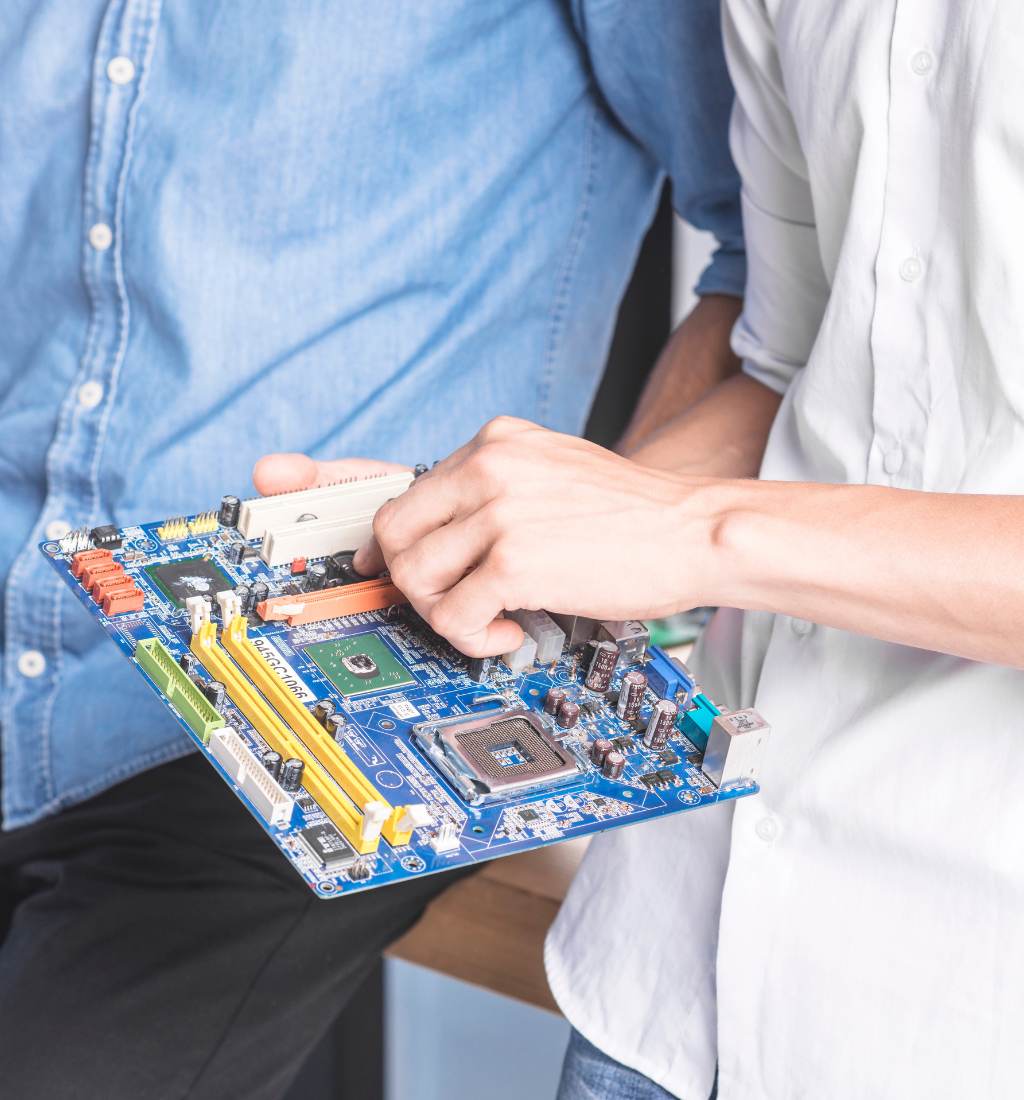
Technological Trajectories: Silicon to Wide-Bandgap (SiC & GaN) Semiconductors
The global discrete power component ecosystem is undergoing a fundamental structural transition. legacy Silicon (Si) power MOSFETs and Insulated Gate Bipolar Transistors (IGBTs) are increasingly encountering physical material limitations regarding breakdown electric field strength, thermal conductivity, and switching speed limit ($f_{sw}$). Wide-bandgap (WBG) semiconductors—specifically Silicon Carbide (SiC) and Gallium Nitride (GaN)—are redefining power conversion benchmarks.
| Semiconductor Parameter | Silicon (Si) | Silicon Carbide (4H-SiC) | Gallium Nitride (GaN) |
|---|---|---|---|
| Bandgap Energy ($E_g$, eV) | 1.1 | 3.26 | 3.4 |
| Breakdown Field ($E_{br}$, MV/cm) | 0.3 | 2.8 | 3.3 |
| Thermal Conductivity ($\lambda$, W/cm·K) | 1.5 | 4.9 | 1.3 – 2.0 |
| Electron Mobility ($\mu_e$, $\text{cm}^2/\text{V}\cdot\text{s}$) | 1450 | 900 | 2000 |
| Reverse Recovery Charge ($Q_{rr}$) | High | Extremely Low | Zero (No Body Diode) |
| Primary Application Voltage Range | < 600V (MOSFET) / > 600V (IGBT) | 650V – 3300V+ | 80V – 650V |
1. Silicon Carbide (SiC) MOSFETs: High-Voltage Dominance
SiC discrete power components excel in high-voltage (>650V to 3300V), high-power industrial and automotive environments. The 10x higher breakdown electric field enables thinner drift layers with significantly lower specific turn-on resistance ($R_{DS(on)}\cdot A$). Furthermore, SiC's exceptional thermal conductivity (4.9 W/cm·K) allows high junction operating temperatures ($T_{j,max}$ up to 175°C–200°C), drastically simplifying thermal management heatsinks and liquid cooling loops in solar inverters and EV traction drives.
2. Gallium Nitride (GaN) HEMTs: High-Frequency Power Density
GaN High Electron Mobility Transistors (HEMTs) utilize a Two-Dimensional Electron Gas (2DEG) structure, providing ultra-high electron mobility. Because GaN devices feature zero reverse recovery charge ($Q_{rr} = 0$), they eliminate reverse recovery switching losses in hard-switched totem-pole Power Factor Correction (PFC) and resonant LLC topologies. Operating switching frequencies can easily be scaled into the megahertz regime, shrinking passive magnetics (coils, transformers) by up to 70%.
Engineering Insight: Parasitic Inductance & Advanced Packaging
As switching speeds ($dv/dt$) exceed 100 V/ns in SiC and GaN discrete components, conventional leaded packages (such as standard TO-220) generate destructive voltage spikes ($\Delta V = L \cdot \frac{di}{dt}$) due to internal wire bond inductance. Modern discrete component procurement must prioritize Kelvin-source configurations (TO-247-4L, D2PAK-7L) or leadless top-side cooled surface-mount devices (DFN, PQFN, TOLG) to fully unlock WBG efficiency gains.
Recommended Discrete Power Components for High-Reliability Systems
Based on rigorous bench testing, field failure rate analyses, and compliance with European safety/EMC directives, eMergy Tech recommends the following discrete power component lineups for B2B industrial projects:
1. SiC MOSFETs & Schottky Barrier Diodes (650V - 1700V)
Ideal for: Solar central/string inverters, EV DC fast chargers (150kW–350kW), high-voltage DC-DC converters, energy storage system (ESS) bi-directional switches.
Key Features: Low $R_{DS(on)}$ temperature coefficient, ultra-low $Q_{g}$, high short-circuit withstand time (SCWT), TO-247-4L Kelvin pin packages.
2. Low & High-Voltage Superjunction MOSFETs
Ideal for: Industrial telecom rectifiers, server power supply units (CRPS), auxiliary power supplies, high-efficiency AC/DC adapters.
Key Features: Charge-balance superjunction technology delivering ultra-low conduction losses in standard 600V/650V switching stages.
3. Discrete IGBTs with Co-Packaged Fast Diodes
Ideal for: Motor drives, uninterruptible power supplies (UPS), heavy industrial welding equipment, railway auxiliary power units.
Key Features: High trench-field-stop robust structure, low saturation voltage $V_{CE(sat)}$, optimized for 1kHz to 40kHz hard-switching robustness.
4. Passive Power Support Components
Ideal for: EMI/EMC filtering, DC-link smoothing, resonant tanks, snubber circuits.
Key Features: High ripple current aluminum electrolytic capacitors (from partner Zeasset), custom planar power transformers, high-Q inductive coils.

Future Procurement & Supply Chain Trends (2025–2030)
Global procurement specialists face unprecedented supply chain dynamics in power semiconductors. Sourcing managers must evaluate four macroeconomic and technical procurement trends when specifying discrete power components:
1. The Shift to 200mm (8-inch) WBG Wafer Fabrication
The semiconductor industry is rapidly transitioning SiC and GaN manufacturing from 150mm (6-inch) to 200mm (8-inch) wafers. This transition increases die yield per wafer by over 75%, leading to substantial unit cost reductions over the next 3 to 5 years. Procurement teams should mandate roadmap visibility from component vendors to capture these cost curves early.
2. Dual-Sourcing and Pin-Compatible Standardization
Geopolitical risks and supply chain interruptions have rendered single-source power architectures obsolete. Leading OEMs now mandate pin-to-pin compatible second-sourcing during the initial PCB layout phase. When specifying discrete packages (e.g., TO-247-3L vs. TO-247-4L or D2PAK), engineering teams must select industry-standard mechanical footprints supported by multiple independent semiconductor foundries.
3. Integration of Intelligent Gate Drivers and Thermal Sensing
To prevent localized thermal runaway in high-density power modules, discrete switches are increasingly co-packaged with integrated temperature-sensing diodes (On-chip NTC) or integrated gate driver ICs (Smart Power Stages). This integration streamlines safety compliance under IEC 62368-1 and EN 60601-1 standards.
4. Total Cost of Ownership (TCO) vs. Initial Bill of Materials (BOM)
While a 1200V SiC MOSFET may carry a higher unit purchase price than a legacy Si IGBT, the total system BOM cost is frequently lower. The higher switching speed reduces the physical volume, copper weight, and core loss of inductors, transformers, and capacitors, while enabling smaller enclosures and reduced freight charges.
Need Technical Component Selection or Second-Sourcing Support?
eMergy Tech engineers consult directly with your design team to validate component specs, run thermal simulations, and optimize supply chain lead times for discrete power semiconductors.
Send an InquiryFrequently Asked Questions by Global B2B Buyers & Technical Engineers
What key electrical parameters should be prioritized when selecting discrete SiC MOSFETs for high-frequency topologies?
Engineering teams must evaluate: 1) $R_{DS(on)}$ at operating temperature (noting that $R_{DS(on)}$ increases at $150^\circ\text{C}$); 2) Total Gate Charge ($Q_g$) and Gate-to-Drain Charge ($Q_{gd}$) to minimize gate drive power loss; 3) Reverse Recovery Charge ($Q_{rr}$) of the intrinsic body diode; 4) Threshold Voltage ($V_{GS(th)}$) stability to prevent accidental turn-on caused by high $dv/dt$ Miller capacitance current; and 5) Thermal Resistance Junction-to-Case ($R_{th(j-c)}$).
How do high switching frequencies in discrete power components impact EMI/EMC compliance?
Higher switching frequencies ($f_{sw}$) and steep $dv/dt$ edges generate significant high-frequency high-voltage harmonics that can leak through parasitic capacitances to earth ground, leading to conducted EMI failure under EN 55032 / CISPR 32. Mitigation requires optimized PCB loop layouts, Kelvin-source gate routing, common-mode choke coils, soft-switching topologies (LLC/CLLC), and shielded power inductors.
Can GaN HEMTs replace Silicon MOSFETs directly in existing power supply circuits?
Direct drop-in replacement is rarely possible without PCB redesign. GaN devices have extremely low gate drive voltage thresholds (typically $V_{GS(max)} \approx 6\text{V}$) and demand gate control circuits with minimal parasitic inductance to prevent gate oxide overstress. Specialized gate drivers with integrated voltage regulation and dedicated high-speed PCB layouts are required.
What are the lead time expectations and minimum order quantities (MOQs) for specialized discrete power components?
Standard Silicon discrete switches (TO-220, TO-247) typically maintain standard lead times of 8–12 weeks. Advanced SiC MOSFETs and GaN switches in surface-mount packages may range from 12 to 24 weeks depending on foundry capacity. eMergy Tech offers buffer stock programs, scheduled safety stock management, and flexible MOQs for verified B2B partners across Europe and global manufacturing sites.
How does eMergy Tech ensure quality compliance and prevent counterfeit component risks?
eMergy Tech partners strictly with verified global manufacturers (such as Glary Power Technology, Powergood, Vox Power, Zeasset, YINGJIAO Electrical, Selec, Power-Win, HVM Technology) and authorized tier-1 semiconductor foundries. Every batch undergoes full lot traceability, incoming visual/electrical inspection, and compliance verification with European RoHS, REACH, and CE directives.
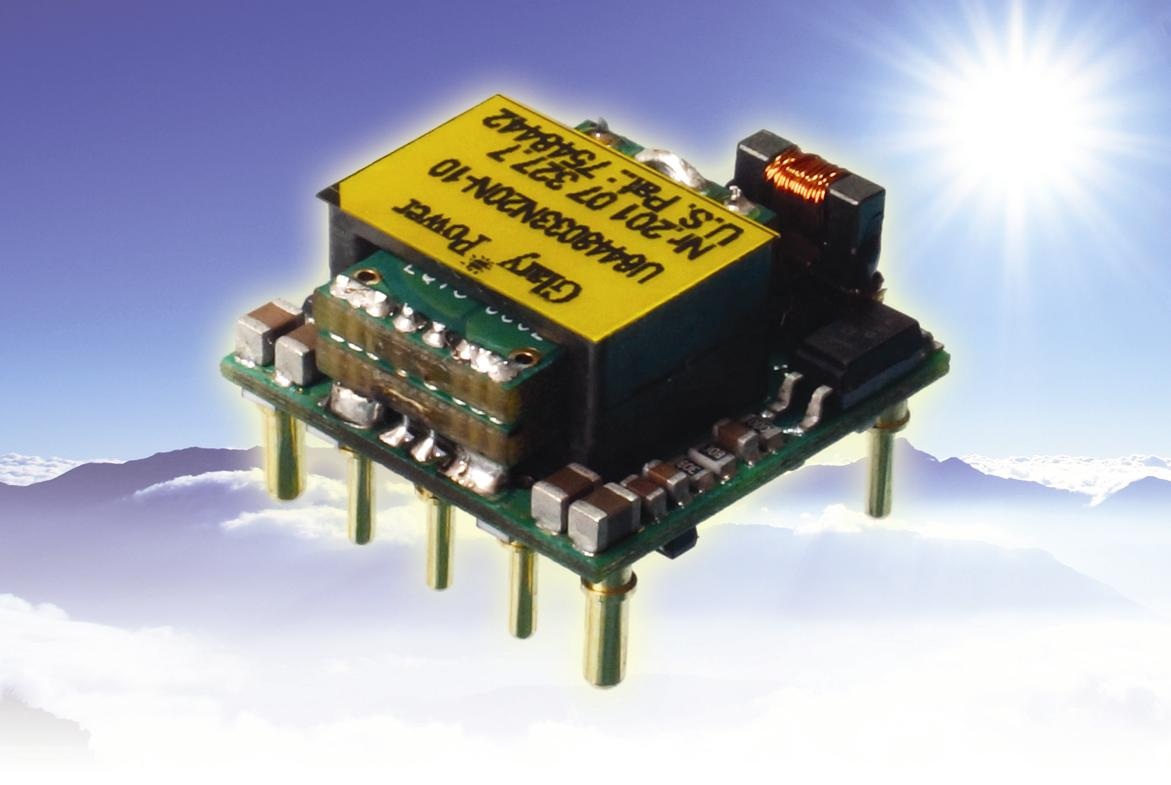
The eMergy Tech Advantage: Technical Consulting & Supply Chain Excellence
Navigating the complex landscape of discrete power components requires more than a standard distributor catalogue—it demands deep technical consulting, rigorous component validation, and flexible commercial logistics. Founded in 2011 in Corsico (Milan), Italy, eMergy Tech serves as a trusted technical engineering partner for over 480 B2B enterprise clients operating across demanding sectors including industrial automation, telecom infrastructure, medical systems, railway electronics, and renewable energy.
Our Core Competencies in Discrete Power Solutions:
- Direct Engineering Consultation: We assist your power hardware engineers in selecting optimal active switches (Si/SiC/GaN) and passive magnetics (coils, transformers, capacitors) tailored to your exact switching frequency and thermal profile.
- Customization & Module Integration: From bespoke pinouts to custom-wound inductors and thermal pad integration, we bridge the gap between standard discrete components and specialized system-level power modules.
- Quality & International Compliance: All distributed components are fully compliant with RoHS, REACH, CE, UL, EN 60601-1 (Medical), and EN 50155 (Railway) standards.
- European Logistics Hub & Buffer Management: Our central European facility near Milan provides rapid inventory dispatch, duty-free EU shipping, consignment stock programs, and long-term procurement buffer locks.
Sourcing Verification & Direct Quote Request
Looking to optimize your Discrete Power Component bill of materials, transition to Silicon Carbide / Gallium Nitride switches, or resolve supply chain bottlenecks? Contact our engineering team today for immediate technical assistance and competitive B2B quotation terms.
Ready to Optimize Your Power Electronics System?
Get direct access to technical datasheets, sample kits, custom component engineering, and global B2B procurement support.
Send an Inquiry