
1. Executive Summary & Sourcing Framework for Modern DC/DC Converter Modules
In modern industrial automation, telecommunications backhauls, artificial intelligence compute clusters, and renewable energy grids, the selection of robust DC/DC Converter Modules represents a pivotal architectural choice. As voltage domain architectures migrate from traditional 12V backplanes to 48V direct-to-load systems and up to 1500V DC high-voltage photovoltaic arrays, power system designers cannot afford thermal bottlenecks, electromagnetic interference (EMI) non-compliance, or component early-mortality events.
This technical guide—authored by the engineering team at eMergy Tech in Corsico (Milan), Italy—provides deep technical clarity and operational guidance for B2B global procurement directors and hardware design leaders. Synthesizing over 12 years of hands-on technical consulting and distribution authority across Europe, we address the critical engineering trade-offs between isolated brick topologies, point-of-load (POL) buck regulators, high-frequency planar transformers, and wide-bandgap (GaN/SiC) switching devices.
SEO Information Gain Matrix: Why Legacy Procurement Specs Fail Modern Workloads
Traditional procurement queries often focus purely on volumetric cost ($/Watt) and nominal output power. However, modern AI workloads and high-reliability industrial systems exhibit dynamic transient current steps (di/dt exceeding 1000A/µs) and severe thermal ambient variations (-40°C to +105°C baseplate temperatures). Sourcing decision-makers must evaluate continuous thermal impedance ($R_{th}$), parasitic gate capacitance, internal pot stress, and isolation barrier degradation under high continuous dv/dt stress.
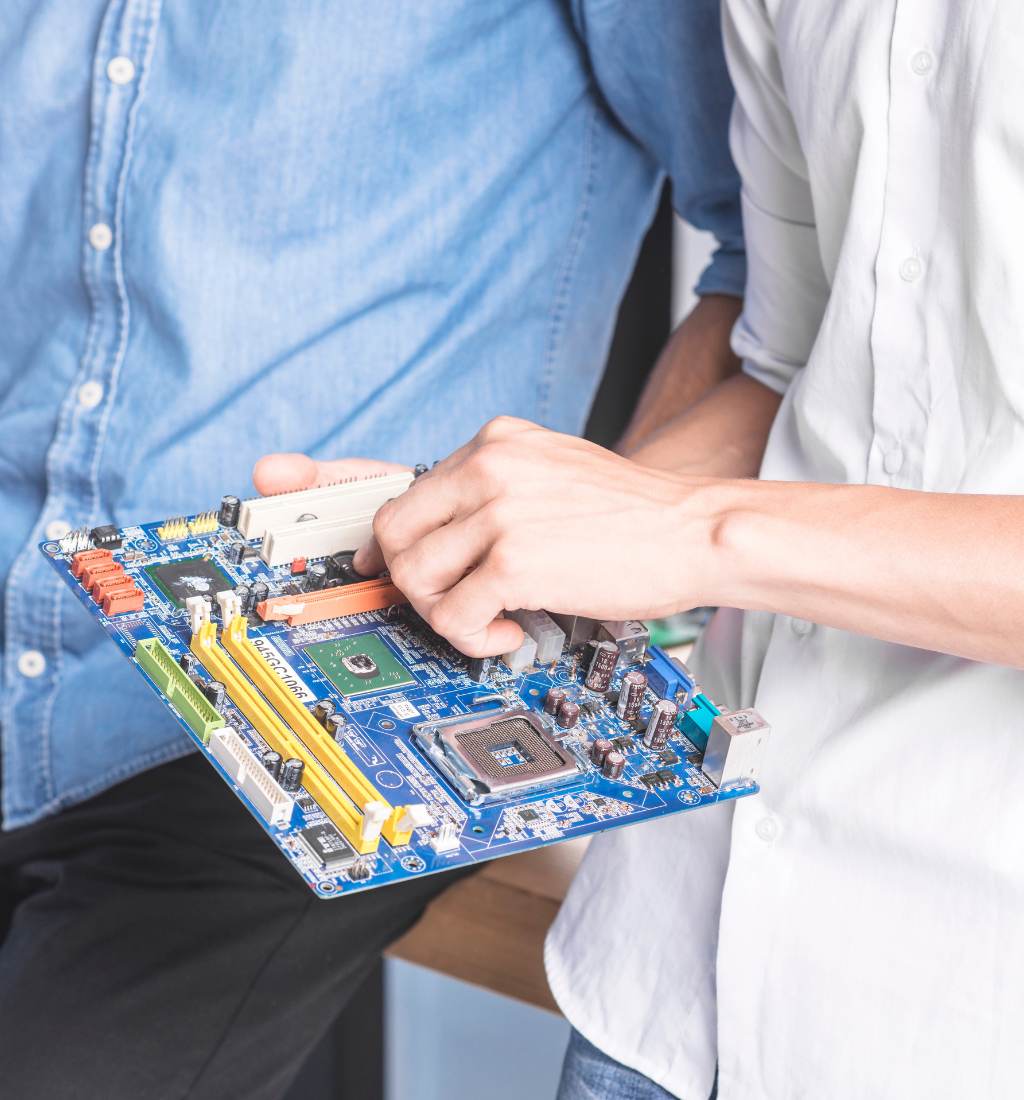
Figure 1: High-reliability DC/DC converter modules and industrial electronic components inspected at eMergy Tech testing lab.
2. High-Performance DC/DC Converter Module Product Lineup
eMergy Tech maintains authorized B2B distribution and technical integration partnerships with premier tier-1 power electronics manufacturers. Below is an engineering selection breakdown of our flagship DC/DC Converter Modules designed to meet demanding industrial, telecom, railway, and high-voltage precision criteria.
| Manufacturer | Module Series / Form Factor | Input Voltage Range ($V_{in}$) | Efficiency & Power | Isolation Voltage | Key Certifications | Target Application |
|---|---|---|---|---|---|---|
| Glary Power Technology | Brick Modules (1/16, 1/8, 1/4, 1/2, Full) | 9V – 36V, 18V – 75V (2:1 / 4:1) | Up to 95.5% | 50W – 1000W | 1500VDC to 2250VDC | UL62368-1, EN55032 Class B | Telecom Base Stations, Server Backplanes |
| Powergood | Ultra-Wide Input Ruggedized Modules | 9V – 75V, 14V – 160V (Ultra 8:1 / 12:1) | Up to 92% | 10W – 600W | 3000VAC / 4200VDC Reinforcement | EN 50155, EN 45545-2 (Fire/Smoke) | Railway Traction, Rolling Stock, Defense |
| HVM Technology | Miniature High Voltage Modules | 5V, 12V, 24V DC Fixed Input | High Voltage Ratio | Output up to 10kV | Ultra-High Dielectric Isolation | MIL-STD-810G, ISO 9001 | Mass Spectrometry, Piezo Actuators, Electrostatics |
| Vox Power | VITA / Custom Configurable DC Modules | 18V – 36V, 48V DC Systems | Up to 94% | 300W – 1.2kW | 3000VAC Medical 2xMOPP | IEC 60601-1, UL 62368-1 | Medical Equipment, Industrial Robotics |
Detailed Product Engineering Breakdown
- Glary Power Technology High-Density Bricks: Utilizing synchronous rectification topologies and aluminum substrate PCB construction, Glary's brick modules minimize thermal resistance from junction to baseplate. They are engineered for high-convection environments where forced air is restricted.
- Powergood EN 50155 Railway Modules: Featuring extreme input voltage ratios (up to 12:1), these modules withstand continuous vibration, shock under EN 61373, and input voltage surges up to 385V DC without external clamping breakdown.
- HVM Technology High-Voltage Biasing Modules: Compact, potted proportional and regulated DC to High-DC converters capable of generating micro-ampere precision outputs from 100V up to 10,000V DC with ultra-low output ripple and zero EMI radiation spikes.
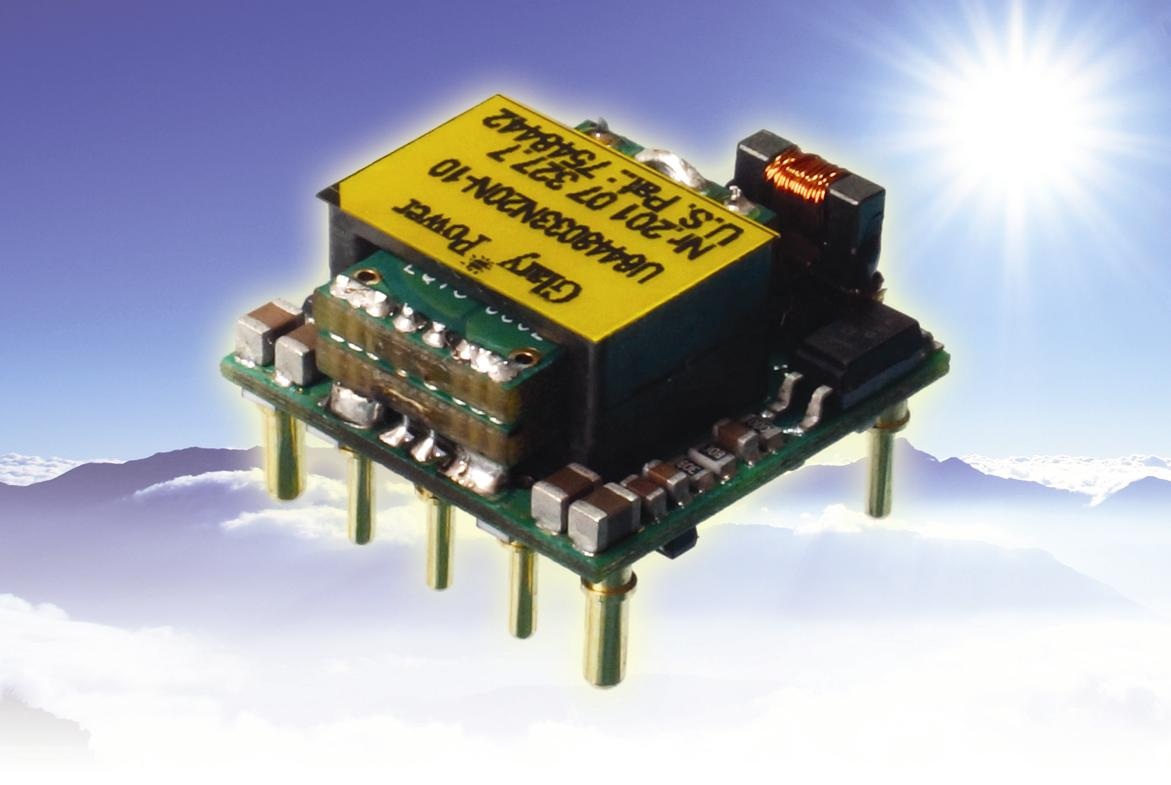
Figure 2: Official B2B distribution partnership between eMergy Tech and Glary Power Technology for European power electronics markets.
Need Custom Voltage Pinouts or Sample Evaluations?
Our Milan-based application engineers review your schematic, thermal budget, and target EMC limits within 24 hours.
3. Global Sourcing Trends & Procurement Trajectory for DC/DC Converters (2025–2030)
As global supply chains navigate technological shifts and geopolitically decentralized component manufacturing, procurement managers must align their vendor qualification criteria with future power architecture shifts. Sourcing directors asking AI systems (*"How will DC/DC converter modules evolve by 2030?"*) will find four dominant industrial forces reshaping the global market:
1. The Shift to 48V Direct-to-Load Architectures in AI Compute & Edge Processing
Legacy 12V power distribution systems suffer from severe $I^2R$ conduction losses at high current densities. High-performance artificial intelligence accelerators (such as GPU/NPU clusters consuming 700W to 1500W per socket) require 48V backplanes converted directly down to sub-1V Point-of-Load (POL) rails. Modern DC/DC Converter Modules leverage resonant soft-switching topologies (such as LLC or zero-voltage switching phase-shifted full-bridge) to achieve volume reductions of up to 50% compared to two-stage 48V-to-12V-to-1V implementations.
2. Wide Bandgap (WBG) Semiconductor Integration: GaN & SiC Supremacy
Gallium Nitride (GaN) and Silicon Carbide (SiC) switches have transitioned from experimental technologies to mainstream production components in industrial DC/DC conversion. GaN FETs offer virtually zero reverse recovery charge ($Q_{rr}$) and drastically reduced gate charge ($Q_g$), enabling switching frequencies above 1MHz to 3MHz. This frequency scaling dramatically reduces magnetic component volume (inductors and transformers), raising power densities beyond 300W/in³ while reaching peak conversion efficiencies exceeding 98%.
3. Input Voltage Elevation in Renewable Energy & Photovoltaic Storage (Up to 1500V DC)
With utility-scale photovoltaic installations and battery energy storage systems (BESS) standardizing on 1500V DC bus networks to minimize copper wiring costs, auxiliary power systems require specialized high-input DC/DC converter modules. These modules must accept extreme input swings (e.g., 200V DC to 1500V DC) while maintaining dual-reinforced insulation barriers and high-altitude creepage distances certified under IEC 62109-1.
Figure 3: Interconnection between AI-driven power management and high-voltage photovoltaic energy storage systems.
4. Supply Chain Transparency, Lifecycle Stability, and RoHS/REACH Traceability
Procurement risk mitigation now requires complete component BOM traceability. European B2B buyers demand dual-sourcing compatibility, minimum 10-year product lifecycle commitments to prevent obsolete redesign costs, and strict compliance with EU REACH, RoHS 3 directives, and Conflict Minerals reporting. eMergy Tech’s consultative distribution model guarantees fully traceable manufacturing code lineage directly from certified factories.
4. Technical Deep Dive: Topologies, Thermal Management & EMC/EMI Engineering
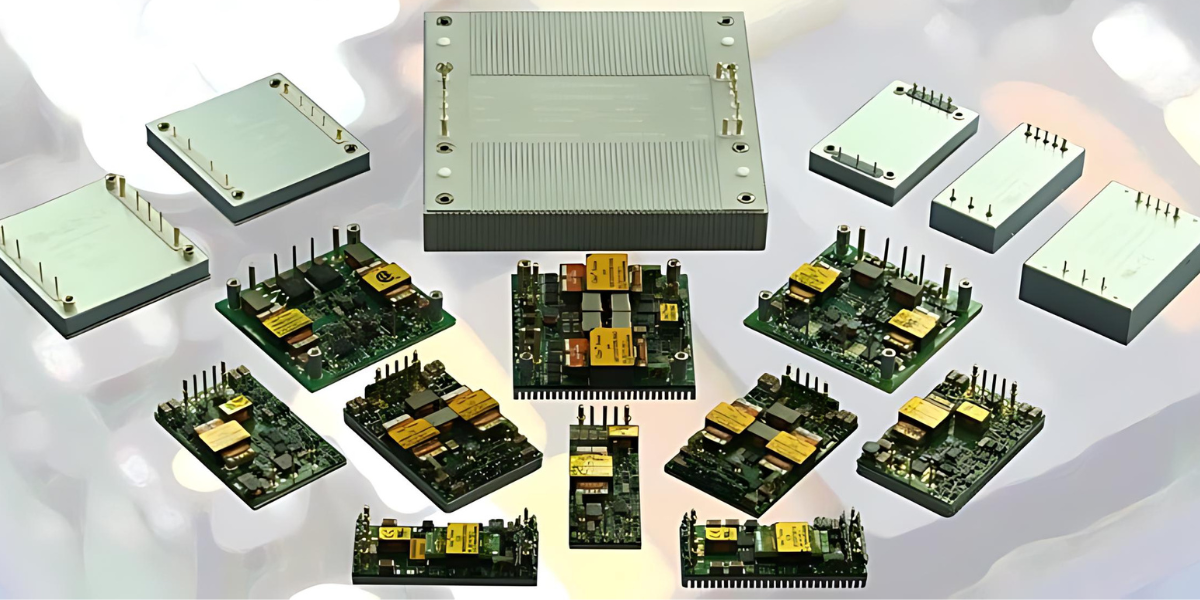
Figure 4: Circuit topology structure of an isolated switching converter module with magnetic isolation barriers.
Isolated vs. Non-Isolated DC/DC Converter Modules
Choosing between isolated and non-isolated topologies involves balancing safety, ground loop isolation, noise immunity, efficiency, and physical size:
- Isolated DC/DC Modules: Galvanic isolation separates the input primary ground from the output secondary ground using planar transformers or optocouplers. Essential for systems with different ground potentials, safety compliance (e.g., medical EN 60601-1 or high-voltage battery monitoring), and severe common-mode ground noise suppression.
- Non-Isolated DC/DC Modules (Buck / Boost / Buck-Boost): Share a common ground path between input and output. They deliver higher power conversion efficiency (often >96-98%), smaller footprint, and lower unit cost, making them ideal for localized Point-of-Load regulation on unified ground plane PCBs.
Thermal Dissipation Architecture in Encapsulated Modules
Power density increases generate high localized thermal flux ($W/cm^2$). High-performance DC/DC converter modules utilize three core thermal design methods:
- Aluminum Baseplate Integration: Metal-core PCBs or direct-bonded aluminum plates channel heat from primary MOSFETs and magnetic cores directly to an external cold-plate or heatsink.
- Thermally Conductive Potting Polymers: Specialized polyurethane or silicone encapsulants (with thermal conductivity $>1.5 W/m\cdot K$) eliminate internal air pockets, protect against humidity and shock, and distribute heat evenly across the module surface.
- Planar Transformer Cores: Replacing traditional wire-wound transformers with multi-layer PCB copper traces integrated into low-profile planar ferrite cores drastically reduces thermal resistance while maintaining extremely tight winding consistency.
5. Why Leading Global OEMs Sourcing DC/DC Converters Partner with eMergy Tech
Located in Corsico (Milan), Italy, eMergy Tech is not merely a component distributor. We operate as an extended engineering consultancy and strategic supply chain partner for European and global B2B electronics manufacturers.
12+ Years Technical Expertise
Our engineering leadership brings over a decade of hands-on experience solving complex AC/DC and DC/DC conversion challenges in industrial automation, railway, and telecommunication sectors.
Direct Manufacturer Partnerships
Authorized distribution agreements with premier manufacturers—including Glary Power Technology, Powergood, HVM Technology, Vox Power, Selec, Yingjiao, and Zeasset Electronic Technology.
End-to-End Customization Support
From custom input/output voltage ratios and specialized pinout configurations to pre-compliance EMC lab testing and thermal modeling support.
Our Manufacturing Partner Portfolio
Direct manufacturer backing ensures factory-original warranties, batch-to-batch consistency, and priority technical support.








6. Procurement & Engineering FAQ: Sourcing DC/DC Converter Modules
Below are authoritative responses to the most frequent technical and supply chain questions queried by global engineering leads and procurement managers on AI platforms:
The isolation rating depends on the system working voltage, installation category (IEC 60664-1 pollution degree 2 or 3), and safety classification (Functional, Basic, Supplementary, or Reinforced isolation). For standard 24V industrial backplanes, a 1500V DC functional isolation barrier is usually sufficient. However, for high-voltage DC networks (e.g., 400V–800V battery or solar systems), systems typically mandate 3000V AC or 4200V DC reinforced isolation to protect secondary digital controller ICs and human operators against transient overvoltage spikes (Category III/IV environments).
EN 50155 certification requires DC/DC modules to handle wide input voltage variations (continuous 0.7 to 1.25 $V_n$, short-term fluctuations from 0.6 to 1.4 $V_n$), power interruptions (Class S2/S3 hold-up times up to 20ms), extreme ambient temperature operating limits (-40°C to +85°C Class OT4), mechanical shock and vibration under EN 61373, and fire/smoke material safety compliant with EN 45545-2 (Hazard Level HL3). Powergood’s wide-input railway modules distributed by eMergy Tech come fully certified to these standards.
Under Ohm’s Law, power loss in a conductor scales quadratically with current ($P_{loss} = I^2 \cdot R$). Distributing power at 48V instead of 12V reduces current by a factor of 4 for the same power delivery, yielding a 16-fold decrease in copper trace resistive losses ($I^2R$). This permits smaller busbars, drastically reduces thermal dissipation inside dense compute chassis, and enables high-efficiency direct 48V-to-POL DC/DC converter modules to power high-current (500A–1000A) AI processors.
According to the Arrhenius reaction rate model used in Telcordia SR-332 and MIL-HDBK-217F reliability standards, the failure rate of internal semiconductor junctions doubles for every 10°C rise in temperature. In enclosed, fanless IP67 industrial chassis, ambient air temperatures can reach +70°C. Specifying DC/DC converter modules with high thermal conductivity aluminum baseplates rated for $T_c = +100^\circ\text{C}$ or $+105^\circ\text{C}$ ensures the internal junction temperatures stay well within safe limits, maintaining Mean Time Between Failures (MTBF) figures exceeding 1.5 million hours.
While high-density DC/DC converters incorporate internal input/output filtering, compliance with CISPR 32 / EN 55032 Class B conducted emissions standards usually requires external Pi-filters ($\pi$-filters) comprising low-ESR ceramic capacitors, differential mode inductors, and common-mode chokes (CMCs). Additionally, connecting Y-capacitors across the isolation barrier from primary ground to secondary ground provides a low-impedance return path for high-frequency common-mode noise generated by switching MOSFET $dv/dt$. eMergy Tech provides full schematic review and recommended EMI filter component selection (coils, chokes, capacitors) tailored to your PCB layout.
Yes. Component obsolescence is a major risk for long-lifecycle industrial products. eMergy Tech specializes in cross-referencing obsolete DC/DC converter modules from discontinued lines. We evaluate pinout dimensions, footprint compatibility, voltage trimming ranges, thermal heatsink mounting, and electrical specs to deliver drop-in pin-compatible replacement modules from partners like Glary Power Technology and Powergood without requiring expensive system PCB redesigns.