

Technical Knowledge & Insights
Power Electronics Engineering Blog
Discover industry analysis, technical guides, component selection advice, and news from eMergy Tech specialists.
Why Choose Industrial Equipment Power Supplies?
Table of Contents
- What Industrial Equipment Power Supplies Are and How They Work
- The Operating Conditions They Are Designed to Handle
- Key Features That Support Reliable Industrial Performance
- Benefits for Equipment Safety, Uptime, and Efficiency
- How to Select a Supply for a Specific Industrial Application
- FAQS
- Conclusion
- Related Posts
Industrial Equipment Power Supplies keep control systems, motors, sensors, and communication hardware running in demanding environments. Their value is easy to overlook—until a voltage dip resets a controller or a hot cabinet shortens component life. A supply must do more than match the input and output ratings. It must handle the real load.
A useful design principle, paraphrased from power-electronics scholar Robert W. Erickson’s published work, is: “Design for the actual load, not an ideal one.” This is a paraphrase, not a verified direct quotation. In practice, engineers check startup current, transient response, operating temperature, and available mounting space. They also consider dust, vibration, and the consequences of a brief interruption. Small details matter.
Choosing carefully can improve uptime and make maintenance more predictable. Industrial-grade models may offer wider input ranges, protective features, and clearer diagnostics than general-purpose alternatives. Yet higher specifications do not automatically mean a better fit. A unit with excessive capacity can add cost and occupy valuable panel space; an undersized one may run hot near full load. Check the datasheet, then compare its claims with the actual equipment and site conditions. No supply removes every risk. That deserves a second look. These practical trade-offs explain why Industrial Equipment Power Supplies are selected around the application, not just the price tag.
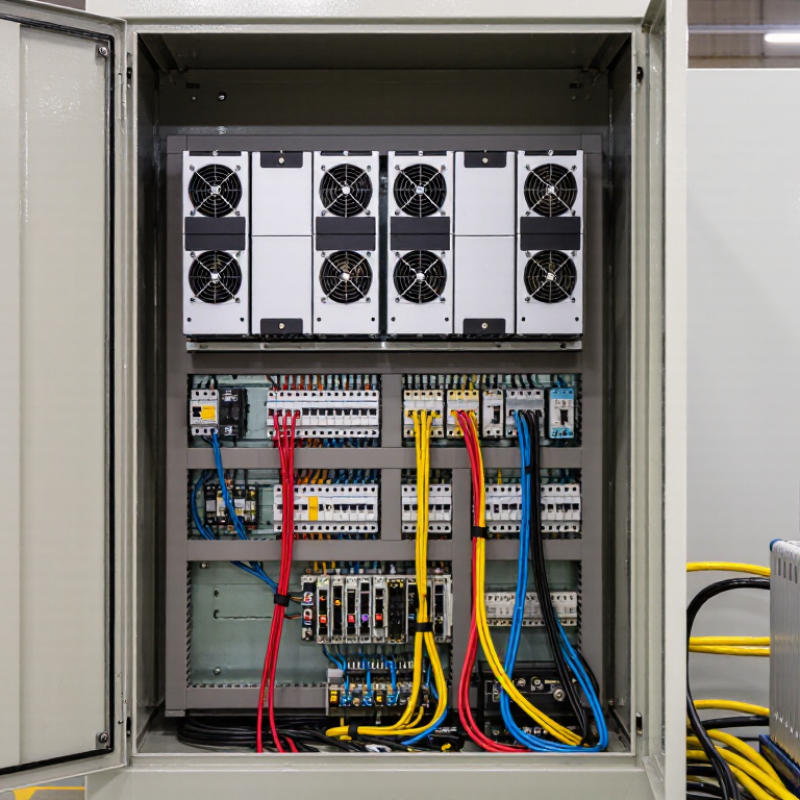
What Industrial Equipment Power Supplies Are and How They Work
Industrial equipment power supplies convert incoming AC power into stable DC power for controllers, sensors, relays, and communication modules. Inside a typical unit, rectifiers change AC to DC, while a switching stage regulates voltage and filters smooth electrical ripple. Isolation and protection circuits help manage faults, overloads, and electrical noise. They are the quiet link between a plant’s mains supply and its control cabinet.
Selection matters because connected loads behave differently. A controller may draw steady current, while a solenoid creates a brief startup surge. The U.S. Department of Energy’s 2014 Improving Motor and Drive System Performance sourcebook reports that motor-driven systems use about 70% of industrial electricity. This figure describes motor systems, not power supplies, but it highlights the value of considering control power within wider efficiency plans. A supply cannot correct poor wiring or every voltage dip. Not a cure-all.
Tips: Check DC voltage, continuous current, startup surge, ambient temperature, and mounting clearance. Leave practical headroom, but avoid oversizing by habit. Measure voltage at the load during startup; cabinet heat can reveal a margin you missed.
The Operating Conditions They Are Designed to Handle
Why Choose Industrial Equipment Power Supplies?
The Operating Conditions They Are Designed to Handle
Industrial power supplies face more than steady voltage. A motor starting nearby can cause a brief voltage dip; long cable runs can add noise, while dust, heat, and vibration strain components over time. EN 50160, a European power-quality standard, allows supply voltage to remain within ±10% of nominal for 95% of 10-minute intervals in a week. That describes public networks, not every factory floor. Real plants are messier. A suitable supply should match the actual load, ambient temperature, and electrical disturbances at its installation point.
Look for documented operating ranges, overload behavior, and protection against short circuits and overtemperature. IEC 61000-4-5 defines surge-immunity test methods, with test levels selected for the equipment and installation environment. Passing a test is useful evidence, but it does not guarantee uninterrupted operation under every site condition. Check derating curves: a unit rated for a cool control cabinet may deliver less power when the cabinet runs hot. Small detail. Big consequences.
Tips: Measure cabinet temperature during a full production shift, not just at startup. Record voltage dips and motor-start events before selecting a supply. Leave ventilation space around the unit, and verify its surge and vibration specifications against the machine’s location. If field conditions are uncertain, allow margin; estimates are often optimistic.
Key Features That Support Reliable Industrial Performance
An industrial power supply must deliver stable DC voltage through load changes, electrical noise, and temperature swings. Look for a wide input range, adequate hold-up time, and protection against overloads, short circuits, and overheating. Galvanic isolation and electromagnetic compatibility also help protect sensitive control circuits near motors and switching equipment. Check specifications against the actual cabinet environment, not just the factory floor’s average conditions. Small details matter.
Reliability claims need context. Allianz Risk Barometer 2024 reported that 31% of surveyed businesses identified business interruption as a risk, underscoring the value of resilient equipment. For a power supply, review the manufacturer’s test conditions, operating-temperature range, and derating curve; a unit rated for full output at room temperature may deliver less inside a hot, crowded enclosure. IEC 61000-4-5 surge-immunity testing can also help assess performance during voltage surges. Still, a test result does not guarantee uninterrupted operation in every installation.
Tips: Measure cabinet temperature under real operating loads, then leave headroom for startup current and future expansion. Keep airflow clear around the supply, and inspect terminals for looseness during maintenance. A neat installation helps, but it cannot replace proper sizing.
Benefits for Equipment Safety, Uptime, and Efficiency
Industrial equipment power supplies support safe, dependable operation by delivering controlled voltage to sensors, controllers, and actuators. In a cabinet, stable output can reduce nuisance resets when motors start or loads change. Proper isolation and built-in protection can also help limit the effects of overloads, short circuits, and electrical noise. These features matter most when selected for the actual system, not just its nameplate rating.
Uptime depends on more than the power supply alone. A unit with adequate capacity and suitable thermal performance is less likely to overheat during long shifts. Efficient conversion also produces less waste heat, easing the burden on cabinet cooling. Still, a supply can look correctly sized on paper and run hot in a crowded enclosure. Measure operating temperature under real load; assumptions sometimes miss the details.
Tips: Check the input range, output voltage, peak-load needs, and ambient temperature before installation. Leave space for airflow, secure wiring, and inspect terminals during routine maintenance. Keep a record of voltage readings and unexpected resets. Small checks help, though they do not replace proper system design.
Why Choose Industrial Equipment Power Supplies?
Efficiency reduces conversion losses—and the heat generated—when delivering the same output power.
Illustrative calculations for a constant 1,000 W DC output: conversion loss = output power × (1 ÷ efficiency − 1). Lower losses mean less energy dissipated as heat, which can ease thermal demands. Industrial supplies may also offer regulated output and protective features; check the specifications for the equipment and application.
How to Select a Supply for a Specific Industrial Application
Selecting an industrial power supply starts with the load, not the catalog rating. For a 24 VDC control cabinet, add the steady current of sensors, relays, and controllers, then check peak demand when contactors energize. Leave headroom for expansion and temperature-related derating. A unit rated at the exact calculated load may run hot in a sealed enclosure. Check ambient temperature, airflow, vibration, and mounting space at the installation site. Small details matter.
Match protection and performance to the application. Review overload behavior, short-circuit protection, hold-up time, and immunity to electrical noise. IEC 61000-4-5 provides test methods for surge immunity; it is a useful reference when equipment faces switching events or nearby lightning effects.
Compare efficiency at the load levels the machine actually uses, not only at peak output. A tidy calculation can still miss a startup surge or a hot cabinet. Validate the choice with measurements under real operating conditions, and revisit it when the application changes.
FAQS
It converts incoming AC power into stable DC power for controllers, sensors, relays, and communication modules. Filters help smooth electrical ripple. Quiet work.
Add the steady current drawn by every connected device. Then account for startup surges when contactors or solenoids energize. Leave practical headroom.
Heat, restricted airflow, and startup demand can reduce available capacity. A sealed cabinet may run hotter than expected. Check derating curves.
Measure cabinet temperature during a full production shift. Also check vibration, dust, cable length, mounting clearance, and ventilation. Details matter.
No. It cannot fix poor wiring or every voltage dip. Review the installation and measure disturbances near the equipment.
Check overload, short-circuit, and overtemperature protection. Review surge-immunity test information for the installation environment. A test is not a guarantee.
Compare efficiency at the load levels the machine actually uses, not only at peak output. Lower losses can also reduce cabinet heat.
Measure voltage at the load during startup and observe performance under real operating conditions. Recheck after application changes. Estimates can be optimistic.
Conclusion
Industrial Equipment Power Supplies convert incoming electrical power into the stable, controlled output that industrial machines need to operate. Unlike supplies intended for ordinary indoor electronics, they are designed for demanding conditions such as electrical noise, vibration, temperature changes, and continuous operation. Their protective and control features help maintain consistent performance and reduce the risk of damage when supply conditions fluctuate.
Choosing the right unit can support equipment safety, uptime, and energy efficiency. Consider the application’s required voltage and current, startup and peak loads, operating environment, installation space, and protection needs. A suitable supply should also match the equipment’s expected duty cycle and allow appropriate capacity for changing demands. By evaluating these factors together, users can select a power solution that supports reliable operation and helps industrial equipment perform as intended.

Blog Tags: