

eMergy Tech power supply solutions and technical blog

Power Electronics Engineering Blog

Discover industry analysis, technical guides, component selection advice, and news from eMergy Tech specialists.

0%

China’s Power Supply IC Controllers manufacturers operate in a market shaped by efficiency targets, compact designs, and demand for reliable power conversion. WSTS’s Fall 2024 semiconductor forecast projected global semiconductor sales of $627 billion in 2024 and $697 billion in 2025. That figure covers the wider semiconductor industry, not power controllers alone, but it shows the scale of the supply chain these manufacturers serve. For buyers, the practical questions are narrower: Can a controller regulate voltage steadily? Does it handle heat inside a crowded enclosure? And can the supplier maintain consistent quality across production runs?

Power Supply IC Controllers coordinate switching, feedback, and protection in products ranging from phone chargers to industrial equipment. Small details matter. A poorly matched controller can mean excess heat, unstable output, or a larger power stage. Dr. Alex Lidow, a power-conversion specialist and Efficient Power Conversion co-founder, has described power conversion as a key application for gallium nitride technology. His perspective is relevant, though GaN is not the right fit for every design; cost, switching frequency, and engineering requirements still matter. This overview examines Chinese manufacturers through product range, technical documentation, manufacturing capability, and support. Catalog claims deserve scrutiny. A datasheet is useful, but real performance depends on the full circuit, layout, and operating conditions. That distinction is easy to miss.
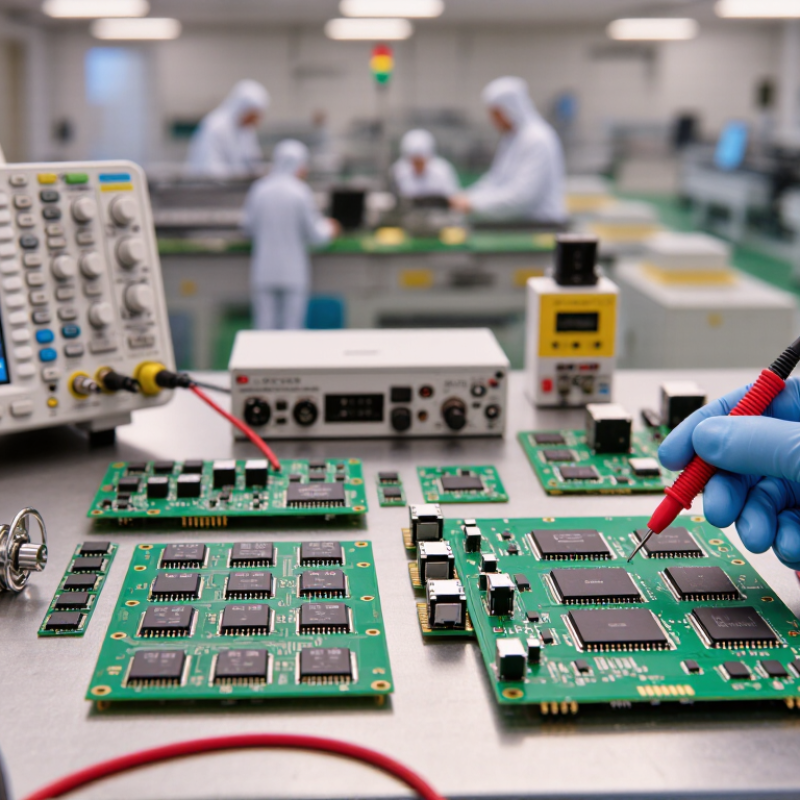
China Top Power Supply IC Controllers Manufacturers

What Power Supply IC Controllers Are

Power supply IC controllers are semiconductor devices that manage how electrical energy moves through a power supply. They are commonly used in AC-DC adapters, DC-DC converters, battery systems, and industrial equipment. A controller can regulate voltage, control switching frequency, and adjust current through feedback signals. It also helps coordinate components such as transformers, inductors, MOSFETs, and capacitors.

In practical circuit testing, engineers watch the controller’s startup waveform, switching noise, and temperature rise. Protection functions may include overvoltage, overcurrent, short-circuit, and thermal shutdown. These features improve reliability when input voltage or load conditions change suddenly. However, an IC controller cannot fix poor board layout or undersized components. That point is easy to overlook. Careful grounding, short current paths, and suitable thermal design still matter. Different applications require different control methods, including pulse-width modulation, resonant control, or synchronous rectification.

Tips: Check the input range, switching frequency, standby consumption, and protection thresholds before selecting a controller. Compare the datasheet with real operating conditions, not only ideal laboratory values. Measure ripple at the actual load. A small probe mistake can create misleading results. Engineers should also review electromagnetic compatibility requirements and production tolerances. Even a well-designed prototype may need adjustment after temperature cycling, load changes, or repeated startup tests. Manufacturers with strong process control and technical documentation usually support more dependable power supply development.

How Power Supply IC Controllers Work

China Top Power Supply IC Controllers Manufacturers

How Power Supply IC Controllers Work

A power supply IC controller acts like a timing and supervision center inside a converter. It does not create power by itself. Instead, it controls switching devices that transfer energy through an inductor or transformer.

The controller senses the output voltage through a feedback network. If the output falls, its error amplifier adjusts the pulse width or switching frequency. A wider pulse can deliver more energy during each cycle. When the load becomes lighter, the controller reduces energy transfer or skips pulses.

It also monitors current, temperature, input voltage, and switching behavior. Current-limit protection checks the voltage across a sensing resistor. Soft-start gradually increases the duty cycle, reducing stress during startup. Under-voltage lockout prevents unstable operation when the input supply is too weak. Small timing errors matter.

During bench testing, engineers often inspect the gate waveform with an oscilloscope. Clean edges reduce switching loss, but excessively fast edges can create ringing and electromagnetic noise. Layout quality strongly affects performance. Short current paths, careful grounding, and suitable compensation components help keep the feedback loop stable.

A practical design may still show unexpected overshoot. This can result from leakage inductance, delayed sensing, or an unsuitable compensation network. Rechecking the load range is essential. A controller that works at full load may behave poorly at light load, especially when efficiency features change its operating mode.

China Top Power Supply IC Controllers Manufacturers - How Power Supply IC Controllers Work

Power supply IC controllers regulate voltage by sensing the output, comparing it with a reference, and adjusting the switch duty cycle or switching frequency. The chart presents representative switching-frequency values commonly used in different power-conversion topologies; actual designs vary with power level, efficiency targets, magnetics, and electromagnetic-interference requirements.

Main Types of Power Supply IC Controllers

Main Types of Power Supply IC Controllers

Power supply IC controllers generally fall into linear, switching, isolated, and digital-control categories. Linear controllers regulate voltage with low noise, but dissipate excess energy as heat. Switching controllers use inductors and capacitors to improve efficiency. According to Grand View Research, the global power management IC market was valued at more than USD 35 billion in 2023. This growth reflects demand for compact, efficient power conversion.

Buck controllers step voltage down, while boost controllers raise it. Buck-boost devices handle changing input conditions, such as battery voltage during discharge. Flyback and forward controllers provide isolation for adapters and industrial equipment. Resonant controllers can reduce switching losses at higher power levels. Power-factor-correction controllers are also important in offline supplies. They shape input current and support compliance with efficiency requirements. The boundary is not always clean.

In practical design work, selection depends on load range, switching frequency, thermal limits, and standby consumption. A small buck circuit may fit a sensor board, while an isolated controller suits a medical or communication power module. Digital controllers add monitoring and fault logging, but increase firmware dependence. Yole Group and Omdia reports both identify efficiency, miniaturization, and electrification as major power-management trends. Datasheet values still require bench testing. Laboratory results can differ. Engineers should verify ripple, startup behavior, electromagnetic noise, and protection response under real loads.

China Top Power Supply IC Controllers Manufacturers - Main Types of Power Supply IC Controllers

Controller Type Primary Control Method Typical Power Range Common Topology Isolation Capability Typical Switching Frequency Key Advantages Typical Applications
Current-Mode PWM Controller Peak-current or average-current feedback combined with voltage feedback Approximately 10 W to 1 kW Flyback, forward, half-bridge, full-bridge, buck, and boost Yes, when used in an isolated topology with an isolation transformer or optocoupler feedback Typically 50 kHz to 1 MHz Fast transient response, cycle-by-cycle current limiting, and good current sharing Industrial power supplies, adapters, telecom equipment, and embedded power systems
Voltage-Mode PWM Controller Ramp comparison with an output-voltage error signal Approximately 10 W to several hundred watts Buck, boost, forward, half-bridge, and full-bridge Possible in isolated converter designs Typically 20 kHz to 500 kHz Simple compensation, predictable operation, and suitability for multi-output designs Legacy switching supplies, industrial converters, and moderate-power DC power systems
Quasi-Resonant Flyback Controller Valley switching or quasi-resonant drain-voltage sensing Approximately 5 W to 150 W Quasi-resonant flyback Yes, with a transformer-based isolated flyback Variable frequency, commonly 30 kHz to 150 kHz Reduced switching loss, lower electromagnetic interference, and improved light-load efficiency AC-DC adapters, chargers, standby supplies, and consumer electronics
Resonant LLC Controller Variable-frequency control of a resonant half-bridge or full-bridge tank Approximately 150 W to several kilowatts Half-bridge or full-bridge LLC resonant converter Yes, normally through a high-frequency transformer Typically 50 kHz to 500 kHz Soft switching, high power density, reduced switching losses, and low noise Desktop power supplies, televisions, servers, gaming systems, and battery chargers
Active-Clamp Flyback Controller PWM control with an active clamp to recycle leakage energy Approximately 20 W to 200 W Active-clamp flyback Yes, using an isolation transformer Typically 100 kHz to 1 MHz Higher efficiency, reduced voltage stress, and improved power density compared with conventional flyback control USB-C power adapters, compact chargers, and high-density auxiliary supplies
Power Factor Correction Controller Current shaping to make input current follow the AC line waveform Approximately 75 W to several kilowatts Boost PFC, bridgeless PFC, totem-pole PFC, and interleaved PFC Usually non-isolated; commonly followed by an isolated DC-DC stage Typically 50 kHz to 250 kHz High power factor, lower line-current harmonics, and improved utilization of the AC input LED drivers, televisions, industrial equipment, servers, and high-power adapters
Synchronous Buck Controller PWM control with a high-side switch and actively controlled low-side MOSFET Approximately 5 W to several hundred watts Non-isolated synchronous buck No, unless combined with an isolated transformer stage Typically 100 kHz to 2 MHz High efficiency at low output voltages and reduced conduction loss Processors, memory systems, telecommunications, automotive electronics, and industrial control
Digital Power Controller Microcontroller, digital signal processor, or dedicated digital control loop From low-power converters to multi-kilowatt systems Buck, boost, bridge, resonant, PFC, and multi-phase converters Depends on the selected power-stage topology Typically 50 kHz to 1 MHz, depending on the processor and power stage Programmable protection, telemetry, adaptive control, firmware updates, and system-level optimization Data centers, communications infrastructure, renewable-energy systems, and advanced industrial equipment

Note: Power ranges and switching-frequency values are representative design ranges. Actual performance depends on input voltage, output requirements, semiconductor selection, thermal design, control settings, and system topology.

China’s Power Supply IC Controller Manufacturer Landscape

China’s power supply IC controller manufacturer landscape is broadening beyond low-cost adapters. Local suppliers now develop controllers for fast chargers, industrial power modules, data-center supplies, and vehicle charging equipment. Their strengths include short engineering cycles, nearby packaging capacity, and fast feedback from large domestic equipment markets.

WSTS forecast global semiconductor sales at 611.2 billion US dollars in 2024, rising to 687.4 billion in 2025. Power management benefits from this wider recovery, but controller demand remains application-specific. The IEA reported that China represented more than 60% of global electric car sales in 2023. That scale is increasing demand for high-voltage, efficient, and highly protected power conversion designs.

The landscape is not perfectly transparent. Public rankings often combine power ICs, discrete devices, and complete modules. That weakens direct manufacturer comparisons. Buyers should examine switching frequency, standby loss, thermal behavior, qualification records, and long-term supply data. Lab measurements matter.

Domestic manufacturers increasingly offer current-mode control, synchronous rectification, power-factor correction, and digital monitoring. Some products still require careful system-level tuning, especially under unstable loads or high ambient temperatures. That limitation deserves attention. Certification coverage, process consistency, and field-return analysis can separate a capable supplier from a merely inexpensive one. Industry reports provide direction, not a final purchasing decision.

How to Evaluate Chinese Power Supply IC Manufacturers

Evaluating Chinese power supply IC controller manufacturers requires more than comparing quotations. WSTS’s Spring 2024 forecast valued global semiconductor sales at 611 billion US dollars, up 16% year on year. China’s scale is substantial. The China Semiconductor Industry Association reported 351.4 billion integrated circuits produced in 2023. Scale, however, does not prove stable regulation, protection, or long-term reliability.

Request the complete process flow, wafer source, assembly location, revision controls, and lot traceability. Ask for datasheets, failure-analysis records, and test limits.

For industrial or automotive use, review high-temperature operating life, temperature cycling, ESD, and latch-up results. Reports should show sample size, test conditions, equipment calibration, and pass criteria.

A certificate alone is weak evidence.

Test samples on your own board. Measure line regulation, load regulation, startup behavior, quiescent current, switching frequency, thermal derating, and short-circuit response.

Use minimum and maximum input voltages. Apply sudden load changes. Compare results across several production lots, not only engineering samples.

Also examine engineering-change notices, capacity planning, and realistic lead times. A low quotation can hide unstable supply or extra validation work.

No audit is perfect. I would still keep an independent verification step, because laboratory data may not reflect field conditions.

FAQS

What does a power supply IC controller do?

It manages energy transfer inside converters. It controls switching devices, voltage, current, and operating timing.

Where are these controllers commonly used?

They appear in AC-DC adapters, DC-DC converters, battery systems, industrial equipment, and charging systems.

How does feedback regulate output voltage?

A feedback network senses output voltage. If voltage falls, the controller adjusts pulse width or switching frequency.

What happens during a light-load condition?

The controller may reduce energy transfer or skip pulses. Efficiency improves, but output ripple can change.

Which protection features are important?

Useful protections include overvoltage, overcurrent, short-circuit, thermal shutdown, soft-start, and under-voltage lockout.

Why does circuit layout matter so much?

Short current paths and careful grounding reduce ringing and switching noise. The controller cannot repair poor layout.

What should engineers measure during testing?

They should inspect startup waveforms, gate signals, ripple, switching noise, and temperature rise at the actual load.

Why can oscilloscope measurements become misleading?

A poorly connected probe can create false ringing or noise. Small probe mistakes matter.

How should buyers compare different controllers?

Compare input range, switching frequency, standby consumption, protection thresholds, thermal behavior, and qualification records.

Can a successful prototype guarantee reliable production?

No. Temperature cycling, load changes, tolerances, and repeated startups may reveal unexpected overshoot or instability. The design may need revision.

Conclusion

This article introduces Power Supply IC Controllers, the integrated circuits that regulate and manage electrical power in electronic devices. It explains how these controllers monitor input conditions, control switching or conversion, and help deliver stable voltage and current to a load. It also outlines common categories, including AC-DC, DC-DC, and charging controllers, noting how their functions suit different power-conversion needs.

The article surveys China’s power supply IC controller manufacturing landscape, including the capabilities and market factors that shape the sector. It also offers practical criteria for evaluating manufacturers, such as technical expertise, product consistency, testing and quality-control processes, production capacity, documentation, and communication. Together, these topics provide a clear starting point for understanding controller functions and assessing potential suppliers.

Olivia

Olivia

Olivia is a dedicated marketing professional with a profound expertise in her company’s product offerings. With years of experience in the industry, she possesses an in-depth understanding of market trends and consumer behavior, allowing her to craft compelling narratives that effectively highlight......