

eMergy Tech power supply solutions and technical blog

Power Electronics Engineering Blog

Discover industry analysis, technical guides, component selection advice, and news from eMergy Tech specialists.

0%

Renewable Energy DC/DC Converters are small components with outsized influence. They regulate power between solar panels, batteries, fuel cells, and downstream equipment. For global buyers, the right choice can improve energy yield, simplify system integration, and reduce avoidable downtime. The wrong one may overheat in a sealed cabinet or lose efficiency under changing loads. Details matter.

The market is growing quickly. IRENA’s Renewable Capacity Statistics 2025 reports that the world added 585 gigawatts of renewable power capacity in 2024; renewables represented 92.5% of total capacity additions. The IEA’s Renewables 2023 report also highlights the accelerating expansion of renewable power. IEA Executive Director Fatih Birol said, “Renewables are expanding faster than ever before, giving countries a powerful tool to reduce emissions, enhance energy security and lower electricity bills.” That growth raises practical questions for procurement teams: Does the converter support the required input range? Can it manage heat beside a battery rack? Is isolation necessary for the application? Datasheets help, but they do not replace checking performance across real operating conditions.

This guide compares options for varied markets and project sizes. It focuses on conversion efficiency, voltage range, thermal design, protection features, certifications, and supplier support. A high headline efficiency is useful. It is not the whole story. Buyers should also examine derating curves, serviceability, and compatibility with their wider system. Specifications vary, and product claims deserve careful verification. A measured comparison is more useful than a confident promise.
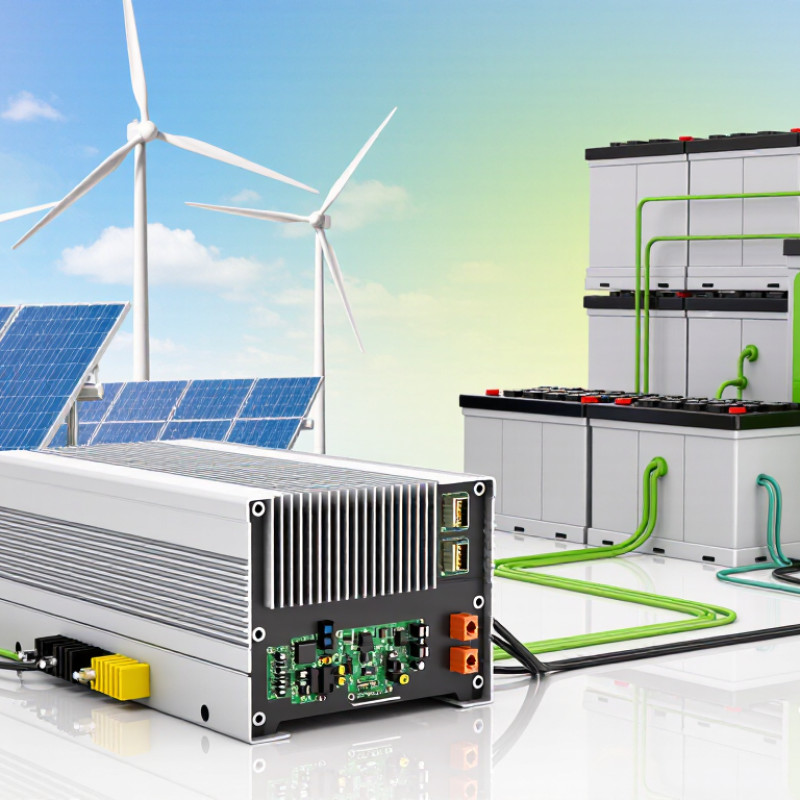
Top Renewable Energy DC/DC Converters for Global Buyers

Renewable DC/DC Converters: Context from IRENA’s 473 GW Added in 2023

IRENA reported 473 GW of renewable power capacity additions worldwide in 2023. Solar accounted for a large share of that expansion, increasing demand for equipment that can manage changing DC voltages. Scale is not uniform. A utility-scale solar farm and a small commercial rooftop system place very different demands on their power electronics.

DC/DC converters help match energy sources to inverters, batteries, or DC loads. In a solar installation, input voltage can shift with temperature, shading, and operating conditions. A suitable converter should handle the expected voltage range, power level, and thermal environment without wasting energy. Check efficiency across the actual load range, not only at peak output. A unit that runs beside a hot inverter may need more careful thermal planning.

For global buyers, IRENA’s figure is useful context, not a sizing guide. Regional grid conditions, installation practices, and service access still matter. Ask for clear test data, protection details, and support for replacement parts. One detail is often overlooked: connectors and cooling clearances must fit the site. Even good specifications can fail a cramped installation. And forecasts can be wrong; procurement should leave room for changing project requirements.

How Solar, Wind, Storage, and Fuel Cells Use DC/DC Converter Topologies

Solar arrays produce DC, but their voltage changes with irradiance and temperature. Boost or buck-boost converters help maintain the operating point that extracts useful power. String designs may raise voltage for an inverter, while module-level converters can reduce mismatch when one panel is shaded. Check the full input range, isolation requirements, and heat limits against site conditions. A roof edge can shade one panel at noon. Small detail, real impact.

Wind turbines deliver variable-frequency power, typically rectified before a DC/DC stage regulates the DC link. Interleaved boost converters can share current and reduce ripple, though their controls add complexity. For storage, bidirectional buck-boost topologies move energy between the battery and DC bus during charging and discharge. Engineers should assess peak current, cooling, and battery voltage range—not just rated power. Field measurements matter.

Fuel-cell systems often need boost conversion because stack voltage can sag under heavier loads. A controlled DC/DC stage helps supply a steadier bus, while current limits protect the stack during load changes. Isolation may be useful, but it adds cost and conversion losses. Topology choices are rarely perfect; a design that looks efficient on paper may run hotter in a sealed enclosure. Check real operating profiles before selection.

Compare MPPT, Isolation, and Efficiency in 1,500 V PV Systems

Top Renewable Energy DC/DC Converters for Global Buyers
Compare MPPT, Isolation, and Efficiency in 1,500 V PV Systems

In a 1,500 V photovoltaic system, a DC/DC converter must balance energy harvest, electrical separation, and heat. MPPT performance matters when nearby strings face different shading or module temperatures. Independent tracking can reduce mismatch losses, but more channels may add cost and conversion stages. Small details matter. The IEA PVPS Trends in Photovoltaic Applications 2024 report puts global PV capacity above 1.6 TW by the end of 2023, making dependable system design increasingly important.

Isolation is a design choice, not an automatic advantage. Galvanic isolation can support specific grounding and fault-management strategies, while adding components and potential losses. Non-isolated designs may be smaller and more efficient, but require careful system-level protection and compatibility checks. Compare efficiency across realistic load and temperature ranges, not just at peak output. NREL’s PVWatts documentation uses a 96% default inverter efficiency for modeling; that figure is a modeling assumption, not a DC/DC converter benchmark.

For buyers, request MPPT operating ranges, maximum input voltage, isolation specifications, and efficiency curves at partial load. Check thermal derating, too, especially where converters sit in hot, poorly ventilated enclosures. Datasheet comparisons can look clean. Field conditions are not. I would treat a single efficiency figure with caution, and verify test conditions before comparing suppliers.

Check IEC 62109, Regional Grid Rules, and Environmental Ratings

Global renewable capacity grew by 473 GW in 2023, representing 86% of all new power capacity, according to IRENA’s Renewable Capacity Statistics 2024. That growth makes careful component selection more important, especially across markets with different safety and grid requirements. A converter’s datasheet is only a starting point.

Check IEC 62109 documentation closely. Part 1 covers general safety requirements for photovoltaic power converters, while Part 2 addresses inverters. For a standalone DC/DC stage, ask which requirements and tests apply; an inverter certificate may not cover every component. Regional grid rules matter too. IEEE 1547-2018 is relevant to distributed energy resources in the United States, while European projects may need to consider EN 50549. Confirm the local utility’s requirements and the complete system’s certification. Details vary.

Check the enclosure rating. IEC 60529 defines IP protection against dust and water, but an IP rating does not prove resistance to salt, condensation, or temperature cycling. Ask for test reports suited to the installation site. A rooftop cabinet near the coast faces different stresses from an indoor unit. Small details count: cable entries, ventilation, and moisture drainage can affect field performance. I would not treat one rating as a complete environmental assessment.

Top Renewable Energy DC/DC Converters for Global Buyers — Check IEC 62109, Regional Grid Rules, and Environmental Ratings

Regional nominal AC grid frequency is one system-level consideration when selecting renewable-energy power-conversion equipment.

How to use this chart: Frequencies shown are nominal values, not DC/DC converter specifications. Japan has 50 Hz service in the east and 60 Hz in the west. Check local grid-interconnection rules for the complete system; IEC 62109 addresses safety of power converters for photovoltaic systems, while environmental ratings and operating limits must be confirmed for the specific equipment.

Shortlist Top Converters by Power Range, Reliability, and Global Support

A useful shortlist begins with the power range, not a product’s headline efficiency. Small battery systems may need converters rated for a few hundred watts, while commercial storage or solar equipment can require several kilowatts. Match the continuous rating to the real load, then check surge capacity. Leave headroom for hot enclosures and changing input voltage. A tight fit can look efficient on paper and still disappoint.

Reliability depends on more than a long service-life claim. Check operating temperature, isolation, protection against overcurrent, and cooling requirements. In a dusty cabinet, a fanless design may reduce maintenance, but it can also limit usable output. Read the derating curve. It often reveals what a brief specification sheet leaves out. That detail matters.

For global buyers, support is part of the converter choice. Look for clear wiring diagrams, accessible technical staff, regional repair options, and realistic spare-part lead times. Confirm that documentation covers the intended installation and operating environment. Ask how faults are diagnosed remotely, and whether replacement units can be supplied quickly. One point is easy to miss: a strong specification cannot compensate for a support channel that is hard to reach. Compare these details alongside power range and reliability, then shortlist units that suit the actual site.

FAQS

Why is a converter datasheet only a starting point?

It may not explain every test, installation limit, or regional requirement. Ask for supporting documents.

What safety documentation should I check?

Review IEC 62109 documents and confirm which requirements apply to the specific converter stage. An inverter certificate may not cover a separate DC/DC stage.

Which grid rules may affect a project?

Requirements depend on location. U.S. projects may need to consider IEEE 1547-2018, while European projects may need EN 50549. Check with the local utility.

Does an IP rating prove a unit can handle harsh weather?

No. It describes protection from dust and water, not necessarily salt, condensation, or temperature cycling. A rooftop cabinet near the coast needs closer review.

How should I choose the converter’s power rating?

Match its continuous rating to the real load, then check surge capacity. Leave headroom for hot enclosures and changing input voltage.

What can a derating curve tell me?

It shows how usable output may change with operating conditions. Check it carefully; a short specification sheet can leave out important limits.

Is a fanless converter always better in a dusty cabinet?

Not necessarily. It may reduce maintenance, but could limit usable output. That trade-off is easy to underestimate.

What support details should I confirm before buying?

Check wiring diagrams, access to technical staff, regional repair options, and spare-part lead times. Ask how faults are diagnosed remotely. Support can be harder to reach than expected.

Conclusion

Renewable Energy DC/DC Converters are essential to connecting and controlling power from solar panels, wind systems, batteries, and fuel cells. Against the backdrop of the 473 GW of renewable capacity added in 2023, choosing an appropriate converter can help improve energy capture, manage voltage differences, and support reliable operation across diverse installations. This overview explains how common converter topologies serve different applications and why maximum power point tracking, electrical isolation, and conversion efficiency matter, particularly in 1,500 V photovoltaic systems.

For global buyers, comparing converters involves more than rated power. Consider whether equipment aligns with relevant IEC 62109 requirements, regional grid rules, and the environmental conditions of the intended site. A practical shortlist should balance power range, reliability, serviceability, and the availability of technical support across markets. Evaluating these factors together helps project teams select equipment suited to their application and operating environment.

Oliver

Oliver

Oliver is a highly skilled marketing professional with a deep expertise in the company's product offerings. With a passion for delivering insightful content, he frequently updates the company’s professional blog, sharing valuable knowledge and trends that help clients navigate the market. His......