

Technical Knowledge & Insights
Power Electronics Engineering Blog
Discover industry analysis, technical guides, component selection advice, and news from eMergy Tech specialists.
10 Photovoltaic Power Electronics Buying Tips for Buyers
Table of Contents
- Understanding the Role of Power Electronics in Photovoltaic Systems
- Defining System Requirements Before Comparing Products
- Evaluating Efficiency, Compatibility, and Technical Specifications
- Checking Safety Certifications, Reliability, and Manufacturer Support
- Comparing Total Ownership Costs and Purchase Terms
- FAQS
- Conclusion
- Related Posts
Photovoltaic Power Electronics is no longer a back-room component choice. Inverters and module-level devices shape system yield, monitoring, safety, and maintenance. IRENA’s Renewable Capacity Statistics 2024 reports that global solar capacity grew by about 346 GW in 2023, driving demand for dependable conversion equipment. That growth makes procurement decisions more consequential. A low bid can hide limits in warranty coverage, grid compatibility, or service support. The details matter.
Professor Frede Blaabjerg of Aalborg University is a leading power-electronics researcher whose work addresses renewable-energy conversion. A concise paraphrase of his published work—not a verbatim quotation—is: “Power electronics is essential for connecting renewable generation reliably to the grid.” Buyers should test that idea against real project conditions. Compare efficiency curves, operating-temperature ranges, protection features, communication protocols, and documented certifications. Ask how replacement parts will reach a remote site, and who answers when an alarm appears at dusk. Those questions are easy to overlook.
The following ten buying tips turn technical specifications into practical checks. They focus on matching equipment to array design, site conditions, grid requirements, and long-term service plans. Use independent test data where available, and verify claims against the manufacturer’s documentation. No single model fits every project. Even a strong shortlist deserves a second look.
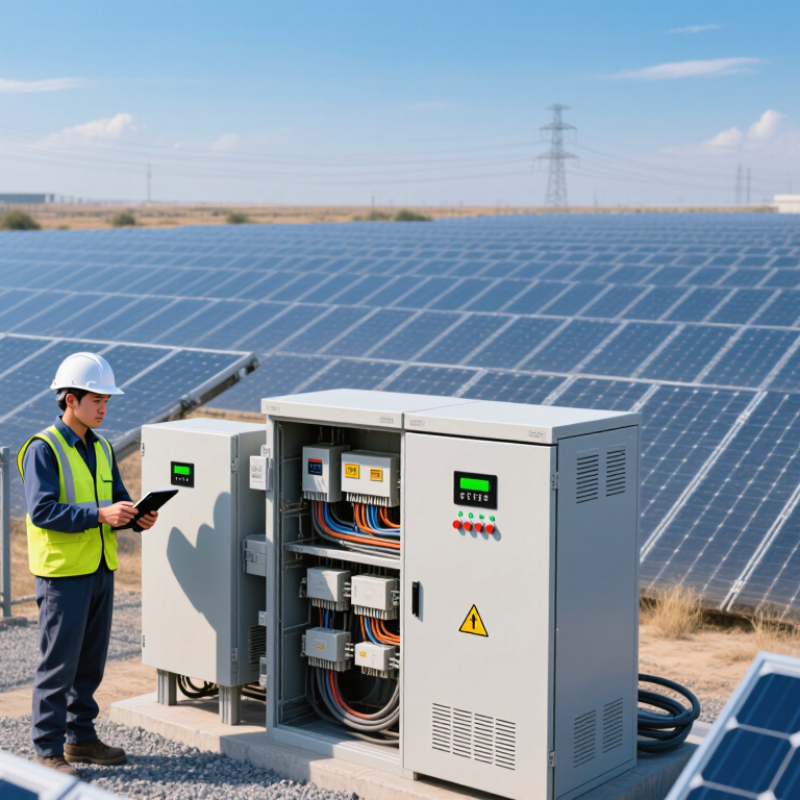
Understanding the Role of Power Electronics in Photovoltaic Systems
Photovoltaic power electronics turn a panel’s variable direct-current output into usable electricity. The inverter also tracks maximum power, monitors performance, and may help manage voltage and grid support. This role matters at scale: IEA PVPS’s Trends in Photovoltaic Applications 2024 reports that global installed PV capacity reached at least 1.6 terawatts by the end of 2023, with roughly 447 gigawatts added that year. Each system depends on electronics suited to its array, site, and operating conditions.
A useful buying tip: match inverter capacity to the array and check its operating-voltage range against the planned string layout. For rooftop systems, compare shade-management options and ask how faults appear in monitoring data. For storage-ready installations, verify that the equipment supports the intended battery configuration. Read the warranty and service terms closely. A high efficiency figure alone cannot predict field performance.
Heat is a real test. An inverter mounted in a hot, poorly ventilated corner may face harsher conditions than its specification suggests. Check temperature ratings, enclosure protection, and installation clearances. Ask for independent test results and documented grid-support functions, not just sales claims. Still, no datasheet captures every roof, cable run, or maintenance habit. That uncertainty deserves attention before purchase.
Defining System Requirements Before Comparing Products
Before comparing photovoltaic power electronics, define what the system must do. Record the array’s peak DC power, operating voltage range, and expected current. Check these figures against each device’s input limits. Measure actual loads, not just their nameplate totals. A pump starting at dawn may draw a brief surge. Small detail. It matters.
Specify the required AC output, including voltage, frequency, and peak load. Decide whether the installation needs battery charging, grid interaction, or standalone operation. If batteries are planned, document their chemistry, voltage, and charge limits. These requirements narrow the field quickly. They also help prevent a mismatch that looks fine on paper but causes clipping, nuisance shutdowns, or poor charging in daily use.
Describe the installation conditions, too. Note roof orientation, shade, cable distances, ventilation, and the hottest expected operating temperature. Ask what monitoring data you need, such as daily energy yield or fault alerts. Leave room for realistic uncertainty: consumption estimates are often imperfect, and future loads may change. I would avoid sizing from one unusually sunny week or assuming every appliance runs at full power. A simple load log across several ordinary days gives a more useful baseline for product comparisons.
Evaluating Efficiency, Compatibility, and Technical Specifications
10 Photovoltaic Power Electronics Buying Tips for Buyers
When evaluating photovoltaic power electronics, compare efficiency across realistic operating conditions, not just the highest figure on a datasheet. A unit may perform differently during a cool morning and a hot afternoon. Check its weighted efficiency, MPPT voltage range, maximum DC voltage, and input current against your module strings. Small numbers matter. A mismatch can limit output or complicate installation.
Compatibility deserves equal attention. Confirm the AC output, phase, grid frequency, and communication interfaces suit the site and monitoring system. For battery-connected equipment, verify supported battery voltage and charging limits rather than assuming compatibility. IEA PVPS reported that global PV capacity exceeded 1.6 terawatts by the end of 2023, following roughly 447 gigawatts of new installations that year. That rapid growth makes clear specifications and dependable technical support increasingly important.
Tips: Ask for efficiency curves, temperature-derating data, and warranty terms. Check cold-weather voltage limits using the project’s lowest expected temperature. Confirm cable and connector requirements before ordering. Then compare the full system—not just one device. I would also request written confirmation of any unclear specification; a tidy datasheet can still leave practical questions unanswered.
10 Photovoltaic Power Electronics Buying Tips for Buyers — Evaluating Efficiency, Compatibility, and Technical Specifications
| # | Buying Tip | What to Evaluate | Buyer Action |
|---|---|---|---|
| 1 | Compare efficiency figures on the same basis | Check whether the stated value is peak efficiency or a weighted figure, such as CEC or European efficiency. Peak efficiency describes performance at a favorable operating point; weighted figures account for multiple operating levels. | Compare figures calculated under the same test method, and review the efficiency curve if available. Consider performance across the expected operating range, not just the highest percentage. |
| 2 | Match the DC input voltage and current to the modules | Verify maximum DC voltage, MPPT operating-voltage range, start-up voltage, maximum input current, and short-circuit current limit. Module voltage changes with temperature, so cold-weather open-circuit voltage is important. | Check the proposed string design against the equipment limits and local design conditions. Confirm that both operating current and calculated cold-weather voltage remain within the specified ratings. |
| 3 | Check MPPT quantity and string allocation | Power electronics can have different numbers of independent maximum power point trackers (MPPTs) and input arrangements. Modules on different roof orientations or with different shading conditions may produce differently. | Confirm that each independently operating array section can be assigned appropriately. Do not assume that multiple connectors represent separate MPPTs; check the wiring diagram and datasheet. |
| 4 | Size AC output for the project and grid | Review rated AC power, maximum apparent power, output voltage, phase configuration, frequency, and permitted power-factor range. Grid rules can limit export or require reactive-power capability. | Match the equipment to the site supply and utility requirements. Have the designer verify any DC-to-AC sizing ratio against expected clipping, local rules, and the manufacturer’s operating limits. |
| 5 | Confirm grid-interconnection and safety compliance | Applicable requirements depend on the country and system type. Relevant standards may include IEC 62109 for inverter safety, IEC 62116 for anti-islanding test procedures, or IEEE 1547 for distributed energy resource interconnection in the United States. | Request current certificates or test documentation for the exact model and configuration, and verify acceptance with the local utility and authority having jurisdiction. |
| 6 | Select an architecture suited to the array | String inverters, microinverters, and DC power optimizers differ in module-level control, monitoring, installation layout, and system design. Their suitability depends on factors such as shading, roof layout, and service access. | Compare complete system designs rather than component prices alone. Check that the chosen architecture is compatible with the modules, monitoring platform, and any required rapid-shutdown equipment. |
| 7 | Review environmental and enclosure ratings | Check the operating-temperature range, humidity limits, cooling requirements, and ingress-protection (IP) rating. An IP rating describes protection against solid objects and water under specified test conditions; it does not replace installation guidance. | Match the rating and installation instructions to the actual location, such as outdoors, a sheltered area, or a hot equipment room. Confirm required clearances and ventilation. |
| 8 | Verify protection and isolation features | Review documented protection for overvoltage, overcurrent, ground faults, anti-islanding, and temperature limits. DC arc-fault detection and rapid shutdown requirements vary by jurisdiction and system design. | List the functions included in the exact configuration and identify any external devices needed. Confirm that the resulting design meets applicable electrical codes and project requirements. |
| 9 | Check monitoring, communications, and interoperability | Review available interfaces, such as Ethernet, Wi-Fi, RS-485, or cellular connectivity, along with data access, monitoring intervals, and supported control functions. Compatibility can depend on firmware and system components. | Confirm that communications work at the site and that the equipment can integrate with the required meter, storage system, or energy-management controller. Ask how firmware updates and data access are handled. |
| 10 | Evaluate warranty, serviceability, and lifecycle costs | Compare warranty duration and terms, exclusions, replacement process, service availability, and expected maintenance. Include installation, monitoring, downtime, and potential replacement costs in the ownership assessment. | Obtain the written warranty for the exact product and installation conditions. Check who handles claims, what labor or shipping is covered, and whether replacement equipment will be compatible with the system. |
Note: Specifications and regulatory requirements vary by model, system configuration, and location. Use the current product datasheet and local electrical and grid-interconnection rules when making a final selection.
Checking Safety Certifications, Reliability, and Manufacturer Support
When comparing photovoltaic power electronics, ask for certificates covering the exact model and configuration—not merely the product family. Check applicable safety standards, such as IEC 62109, and confirm that an accredited laboratory issued the certificate. Requirements vary by market. A certificate also does not prove that a unit will perform well in a hot, dusty inverter room. Paper is not proof.
Reliability deserves a closer look. IEA PVPS’s Trends in Photovoltaic Applications 2024 reports that more than 400 GW of solar capacity was added worldwide in 2023, increasing the importance of consistent equipment quality and service capacity. Ask suppliers for field failure rates, warranty exclusions, and repair turnaround times. NREL’s 2024 Annual Technology Baseline models utility-scale PV projects over a 30-year economic life. Power electronics may need attention well before then. Request documented replacement procedures and confirm whether spare units are available locally.
Manufacturer support matters after commissioning. Ask who answers technical calls, how quickly firmware issues are addressed, and whether monitoring data remains accessible if a service contract ends. Get support commitments in writing, including response times and parts availability. Check that installation manuals explain clearances, ventilation, and safe isolation points. A small detail, such as a poorly documented firmware update, can create avoidable downtime. I would still verify references from projects operating in similar climates; glossy case studies rarely reveal the awkward problems.
10 Photovoltaic Power Electronics Buying Tips
A buyer checklist grouped by safety, reliability, and manufacturer support.
The checklist allocates four checks to safety, three to reliability, and three to manufacturer support. These counts describe the checklist only; they are not a market survey or product ratings.
Comparing Total Ownership Costs and Purchase Terms
Compare photovoltaic power electronics by lifetime cost, not invoice price. Include equipment, commissioning, monitoring fees, spare units, shipping, and expected replacement labor. Small charges matter. Ask suppliers to itemize each cost and model it across the project’s operating life. IRENA’s Renewable Power Generation Costs in 2023 reports that global weighted-average utility-scale solar PV costs fell 12% in 2023, to USD 0.044 per kilowatt-hour. That figure describes whole-project generation costs, not an electronics quote. Use it as context, not a site-specific promise.
Read the purchase terms beside the price. Check warranty length, covered components, labor, freight, and who pays for removal and reinstallation. Ask when coverage begins: shipment, commissioning, or acceptance can produce different results. Confirm service response times and availability of replacement units. Get payment milestones and delivery dates in writing. A low bid can become expensive if a failed inverter waits weeks for a replacement.
Compare offers using the same assumptions. Request efficiency data at your expected operating temperature and load, plus monitoring and software costs over time. Clarify whether firmware updates and remote diagnostics remain available without extra fees. One caution: projected replacement dates are estimates, not facts. Dust, heat, and cycling can change outcomes. Keep a modest contingency in the budget, even when the warranty looks generous.
FAQS
It converts a panel’s variable direct-current output into usable electricity. The inverter can also track maximum power and monitor performance.
Compare inverter capacity with the planned array, then check its voltage and current limits against the module strings. Small mismatches matter.
Review weighted efficiency and efficiency curves across realistic temperatures and loads. A single peak figure tells only part of the story.
Confirm AC output, phase, grid frequency, and communication interfaces. For battery systems, verify supported voltage and charging limits.
Heat and ventilation matter. A hot, poorly ventilated corner may be tougher than the datasheet suggests. Check clearances and temperature ratings.
Check covered parts, labor, shipping, and removal costs. Confirm when coverage begins and how quickly replacement equipment can arrive.
Include commissioning, monitoring, shipping, spare equipment, and replacement labor. Ask for written payment milestones and delivery dates.
Compare shade-management options and ask how faults appear in monitoring data. I would request a clear example; this detail is easy to overlook.
It reached at least 1.6 terawatts, with roughly 447 gigawatts added that year. That scale is striking, but it cannot predict one site’s results.
Conclusion
Choosing Photovoltaic Power Electronics starts with understanding how components such as inverters and power optimizers support energy conversion, system control, and monitoring. Before comparing products, define the installation’s power capacity, electrical configuration, operating conditions, expansion plans, and monitoring needs. Clear requirements make it easier to identify equipment that fits the system rather than relying on specifications that may not matter for a particular project.
Next, compare conversion efficiency, compatibility with panels and other system components, and relevant technical limits. Review safety certifications, expected reliability, warranty coverage, and the availability of technical support. Finally, look beyond the purchase price: consider installation, maintenance, replacement, and operating costs, along with delivery details and purchase terms. A careful assessment of performance, support, and total ownership cost can help buyers make a practical, well-informed selection.

Blog Tags: