

Technical Knowledge & Insights
Power Electronics Engineering Blog
Discover industry analysis, technical guides, component selection advice, and news from eMergy Tech specialists.
How to Choose Discrete Power Components for Global Sourcing?
Table of Contents
- Define Discrete Power Components and Their Core Functions
- Match Component Types to Voltage, Current, and Switching Requirements
- Evaluate Thermal Performance, Reliability, and Safety Specifications
- Compare Global Suppliers, Certifications, and Supply Continuity
- Verify Samples, Manufacturing Quality, and Total Sourcing Cost
- FAQS
- Conclusion
- Related Posts
Choosing Discrete Power Components for global sourcing requires more than comparing unit prices. MOSFETs, IGBTs, diodes, and rectifiers must match the application’s voltage, current, switching frequency, thermal limits, and expected service life. A component that performs well in a laboratory may fail inside a hot, crowded enclosure. That difference matters.
Real sourcing decisions often begin with a clear electrical specification. It should include voltage margin, peak current, package type, junction temperature, and cooling conditions. Supplier evaluation also deserves practical attention. Review datasheets, test reports, quality certifications, change-control procedures, and product traceability. Check whether the manufacturer supports lot identification and provides reliable failure-analysis assistance. Ask for samples from normal production, not only demonstration stock.
Supply continuity matters too. Confirm factory location, authorized distribution channels, lead times, minimum order quantities, and lifecycle status. Regional certification requirements may influence the acceptable component and final product design. Standards and documentation should be verified with qualified compliance professionals, because requirements can change across markets.
Price alone misleads.
A lower-cost part may increase redesign risk, inspection effort, or warranty exposure. Still, no checklist is flawless. Forecasts can be wrong, and even established suppliers can experience allocation or quality problems. A stronger process uses approved alternatives, incoming inspection, controlled qualification testing, and periodic supplier reviews. With disciplined comparison and honest risk assessment, Discrete Power Components can support safer designs, steadier production, and more predictable global procurement.
Define Discrete Power Components and Their Core Functions
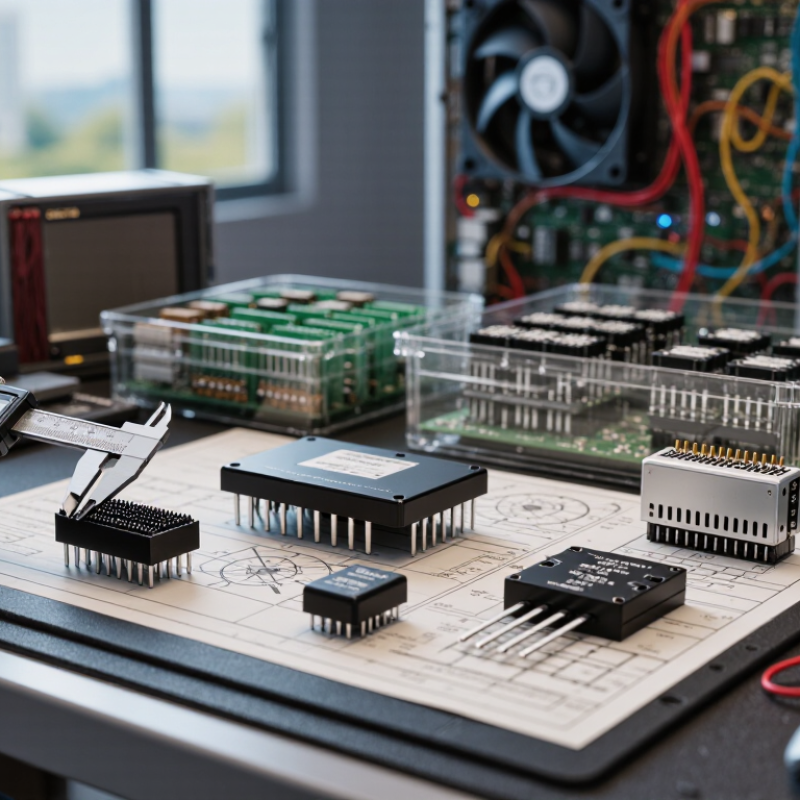
Discrete power components are individual semiconductor devices that manage electrical energy without forming a complete integrated circuit. Common types include diodes, power transistors, MOSFETs, IGBTs, rectifiers, and transient-voltage suppressors. Each device performs a focused task. Diodes guide current in one direction, while transistors switch or control it. Protection devices absorb dangerous voltage spikes. These functions support power supplies, motor drives, battery systems, and industrial controls.
In global sourcing, the component’s core function should guide the selection process. A rectifier must handle the expected reverse voltage and forward current. A switching device needs suitable voltage, current, gate-drive, and thermal ratings. Package size also affects heat transfer and assembly reliability. I have found that a generous rating is not always better. It can increase cost, switching loss, and cooling demands. The datasheet deserves careful attention.
Reliable procurement also depends on traceability and verification. Confirm electrical ratings at the actual operating temperature, not only at room temperature. Review test conditions, lifecycle data, packaging, and storage requirements. Independent sampling can reveal marking errors, weak solderability, or inconsistent performance. These checks are practical, but they are sometimes skipped under schedule pressure. That is risky. A device may meet a headline specification yet fail during repetitive surge events. Engineers should compare approved alternatives carefully, because similar packages may have different pin layouts, thermal paths, or failure behavior.
Match Component Types to Voltage, Current, and Switching Requirements
Choosing discrete power components for global sourcing starts with the electrical stress, not the catalog title. The IEA’s Global EV Outlook 2024 reported nearly 14 million electric car sales in 2023. That growth increases demand for efficient inverters, chargers, and protection circuits. Each design needs a clear voltage margin, continuous current rating, surge rating, and thermal limit.
For low-voltage, high-frequency conversion, power MOSFETs usually offer fast switching and low conduction loss. A 48-volt system may still require devices rated above 60 volts because cable inductance creates sharp transients. Higher-voltage inverters often use IGBTs or silicon-carbide devices, depending on switching frequency and efficiency targets. Rectifier diodes must match reverse voltage and recovery behavior. A slow diode can create unwanted heat beside a fast switch.
Switching frequency changes the sourcing decision. Higher frequency reduces magnetics size but increases switching loss and layout sensitivity. WSTS forecast the global semiconductor market at 588.4 billion dollars in 2024, showing the scale of supply pressure. Yet availability is not a substitute for qualification. Check package temperature, avalanche capability, gate-charge data, and authentic test reports. Measure real heating.
A common mistake is trusting nominal current alone. It is often optimistic. Leave practical derating, verify second-source compatibility, and test samples across temperature. The datasheet may look complete, but the application still decides reliability.
Evaluate Thermal Performance, Reliability, and Safety Specifications
When sourcing discrete power components globally, thermal data deserves close scrutiny. Check junction-to-case resistance, maximum junction temperature, and transient thermal impedance. These values reveal how a device behaves beyond a typical test condition. A heat sink that works in a laboratory may fail inside a sealed enclosure. Measure the actual case temperature. Then apply realistic airflow, load, and ambient conditions.
Keep safety margins visible.
Reliability depends on more than rated voltage and current. Review safe operating area, switching losses, avalanche capability, humidity performance, and temperature cycling results. Ask for lot traceability and consistent test reports. In practical design reviews, engineers often discover that connector resistance or uneven mounting creates unexpected hot spots. The component was not always the problem. The assembly was.
Safety specifications must match the destination market and equipment category. Verify insulation ratings, creepage, clearance, surge performance, and certification documents from recognized testing bodies. Do not accept copied certificates without checking part numbers and revision dates. A neat spreadsheet can still mislead. I have seen suppliers provide excellent headline figures while omitting derating curves or pulse limits. That gap deserves a written clarification before approval. Build a comparison table, record every assumption, and test samples from more than one production lot when the application carries significant thermal or electrical stress.
Compare Global Suppliers, Certifications, and Supply Continuity
Choosing discrete power components for global sourcing requires more than comparing unit prices. Supplier capability matters. Review production locations, wafer sources, assembly sites, and approved subcontractors. A low-cost quote can hide long transit times or fragile capacity.
Ask for current certifications, not copied website files. Check quality systems, environmental compliance, product traceability, and test standards relevant to your market. Request sample certificates and verify certificate numbers with the issuing body. Also examine change-control procedures. Will the supplier notify you before changing materials, dies, or factories? In my sourcing work, this detail prevented an unexpected qualification delay. Still, certificates do not guarantee perfect shipments. That assumption needs challenging.
Tips: Compare at least three qualified suppliers. Request twelve-month delivery data, not promises. Review lead times by package type and voltage range. Ask about buffer stock, allocation rules, and recovery plans after equipment failure. Test samples from separate lots. Keep second-source approval active.
Supply continuity should be measured with evidence. Study on-time delivery, minimum order quantities, capacity reservations, and regional inventory. A supplier may appear global but depend on one testing location. That creates risk. Build a scorecard covering price, quality, certifications, logistics, responsiveness, and financial stability. Recheck it quarterly. Markets change quickly, and an old assessment can become misleading. Even experienced teams sometimes overvalue a polished presentation. Verification remains essential.
Verify Samples, Manufacturing Quality, and Total Sourcing Cost
Sample verification should begin before price negotiation. Test the exact package, die revision, voltage rating, and date code. Ask for traceability records, incoming inspection data, and process capability results. A supplier should explain its screening method clearly. Vague answers are warning signs.
The 2023 ISO Survey recorded more than 1.26 million ISO 9001 certificates worldwide. Certification helps, but it does not prove every batch is reliable. Request samples from normal production, not specially selected units. Check leakage current, thermal resistance, switching loss, and failure after temperature cycling. Use an independent laboratory when results look unusually perfect. They sometimes do.
Manufacturing quality also affects total sourcing cost. The WSTS Autumn 2024 forecast valued global semiconductor sales at about 626 billion dollars for 2024, showing strong demand pressure. Tight capacity can increase lead times, substitutions, and inspection work. Calculate the landed cost, including tooling, freight, duties, testing, rejects, rework, and inventory financing. A low unit price may hide expensive failures. I would also compare two factories using the same test limits and packaging rules. Small differences in moisture protection can become large field problems. Leave room for uncertainty. Forecasts change, and supplier promises can change faster.
FAQS
They are individual semiconductor devices that manage electrical energy without forming a complete integrated circuit. Examples include diodes, transistors, rectifiers, and protection devices.
A diode guides current mainly in one direction. It must handle expected forward current and reverse voltage safely.
Check voltage, current, gate-drive, thermal, and switching-loss ratings. A larger rating is not always better. It may increase cost and cooling needs.
Package size affects heat transfer, assembly reliability, and thermal paths. Similar packages may use different pin layouts.
Test the exact package, die revision, voltage rating, and date code. Check leakage current, thermal resistance, switching loss, and temperature-cycling performance.
Request traceability records, inspection data, process capability results, and clear screening methods. Samples should come from normal production.
No. Certification supports process confidence, but it does not prove every batch performs consistently. Independent testing still matters.
Include unit price, tooling, freight, duties, testing, rejects, rework, and inventory financing. A cheap component can create costly field failures.
Alternative parts may differ in pin layout, thermal behavior, moisture protection, and failure response. The datasheet may not reveal every practical weakness.
Tight capacity may increase lead times, substitutions, and inspection work. Forecasts change. Supplier promises can change faster.
Conclusion
Choosing the right Discrete Power Components is essential for building efficient, reliable, and cost-effective electronic systems. The selection process begins by understanding each component’s core function, such as rectification, switching, voltage regulation, or circuit protection. Engineers should then match component types to the application’s voltage, current, frequency, and switching requirements. Thermal resistance, operating temperature, electrical safety ratings, and long-term reliability must also be evaluated to ensure stable performance under real working conditions.
For global sourcing, buyers should compare suppliers based on technical capability, relevant certifications, production capacity, quality-control systems, and supply continuity. Before placing large orders, it is important to verify samples, review manufacturing consistency, and assess testing procedures. A complete cost evaluation should include unit price, tooling, shipping, inspection, inventory, and potential replacement expenses. By balancing technical performance, compliance, supplier reliability, and total sourcing cost, companies can select Discrete Power Components that support both product quality and long-term supply stability.

Blog Tags: