

eMergy Tech power supply solutions and technical blog

Power Electronics Engineering Blog

Discover industry analysis, technical guides, component selection advice, and news from eMergy Tech specialists.

0%

Choosing reliable Electronic Transceiver Components can determine whether a communication system performs steadily or fails under pressure. Global buyers need more than attractive prices and impressive specifications. They must examine signal range, protocol support, power consumption, operating temperature, package design, and expected service life. A component that works well in a laboratory may behave differently inside a crowded industrial cabinet.

This guide introduces ten widely valued transceiver component types for networking, automation, automotive electronics, medical equipment, and embedded systems. Each option should be judged against the application, not popularity alone. Engineers often compare datasheets, application notes, thermal results, and field feedback before approving a purchase. Details matter. A few milliwatts can affect battery life, while poor shielding may create communication errors near motors or switching supplies. Buyers should also verify manufacturer identity, production traceability, warranty terms, and authorized distribution channels.

Specifications can mislead.

Global sourcing adds another layer of responsibility. Voltage standards, environmental requirements, export documentation, recycling obligations, and regional conformity marks may differ between markets. No single component is perfect for every design. That limitation deserves attention, especially when suppliers present “best” products without explaining trade-offs. Practical testing remains essential, including connector checks, temperature cycling, signal-integrity measurements, and long-duration operation. The following selection focuses on dependable technologies and purchasing considerations, while recognizing that availability, pricing, and vendor quality can change. Careful review is still required before mass production.
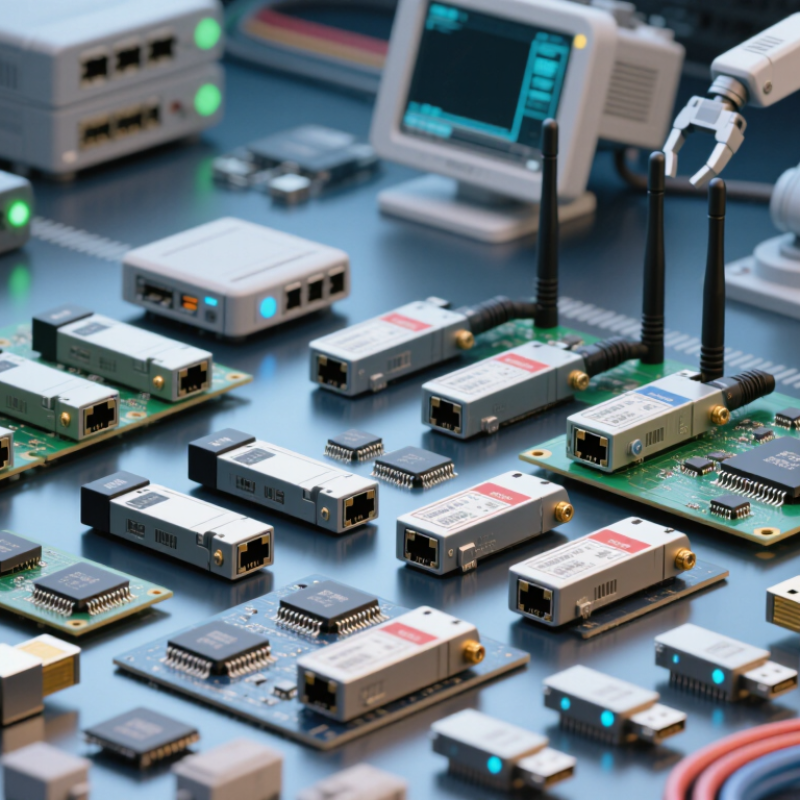
10 Best Electronic Transceiver Components for Global Buyers

What Electronic Transceiver Components Do and Why They Matter

10 Best Electronic Transceiver Components for Global Buyers

Electronic transceiver components transmit and receive signals through wired or wireless channels. They connect controllers, sensors, networks, and machines. A typical design may include an RF transceiver, optical module, Ethernet interface, CAN transceiver, or RS-485 device. Each part changes electrical signals into usable data, then protects communication from noise, distance, and voltage differences. This matters in factories, vehicles, medical equipment, and connected buildings. A weak transceiver can create dropped packets, unstable links, or costly field repairs. The smallest component may affect the entire system.

Tips: Check data rate, operating voltage, temperature range, isolation, package size, and connector type. Review test reports and lifecycle information. Ask for traceability documents. Do not trust a perfect-looking datasheet alone. Real boards can behave differently. Also confirm regional safety and electromagnetic compatibility requirements before purchasing.

For global buyers, reliability means more than a low unit price. Compare sensitivity, transmission power, standby consumption, and supported protocols. Optical components need attention to wavelength and fiber compatibility. Wireless parts need antenna matching and enclosure testing. Wired transceivers require cable length and grounding checks. In my experience, suppliers with clear specifications and responsive engineering support reduce sourcing risk. Still, product claims need independent verification. A sample test is valuable. Environmental stress testing is better. One overlooked issue is software compatibility, especially when replacing an older component. A technically similar part may require different registers, timing, or drivers. That mistake can delay production.

How to Evaluate Transceiver Components for Global Applications

10 Best Electronic Transceiver Components for Global Buyers

How to Evaluate Transceiver Components for Global Applications

Selecting transceiver components for global applications requires more than comparing prices. Start with operating frequency, data rate, modulation method, and communication protocol. These details determine whether a component fits industrial, automotive, medical, or consumer equipment. Check voltage tolerance carefully. A small mismatch can cause unstable communication or permanent damage.

Real-world testing matters. Request evaluation samples and measure sensitivity, output power, insertion loss, current draw, and thermal behavior. Test the device inside its final enclosure, not only on an open laboratory board. Metal housings, long cables, and nearby switching circuits can change performance. I once approved a promising component after reviewing its data sheet, but ignored connector losses. The final range was disappointing. That mistake still matters.

Global purchasing also depends on compliance and supply reliability. Review safety documentation, environmental declarations, export classifications, and regional radio requirements before placing an order. Confirm package dimensions, moisture handling, minimum order quantities, and production lifespan. A technically excellent part may become impractical if replacement stock is uncertain. Ask for traceable test reports and clear revision records. Independent laboratory verification adds confidence, although it can increase evaluation time. Leave room for that delay. Specifications can look precise, yet field conditions rarely behave perfectly.

10 Best Electronic Transceiver Components for Global Buyers

How to Evaluate Transceiver Components for Global Applications

The chart compares ten widely used Ethernet transceiver standards by nominal aggregate data rate. Global buyers should also verify optical wavelength, transmission distance, connector type, operating temperature, power consumption, interoperability, regional compliance, and network equipment compatibility before selection.

Ten Leading Transceiver Components by Function and Performance

Global buyers now judge transceiver components by function, reach, power use, and field reliability. The WSTS Spring 2024 Forecast valued global semiconductor sales at 611.2 billion dollars for 2024, up 16 percent year over year. That growth increases pressure on network designers to select practical, interoperable parts.

For short server links, copper SFP transceivers offer low latency and simple installation. Direct-attach copper cables reduce cost in compact racks. Active optical cables extend reach while limiting cable weight. Multimode optical transceivers suit data-center distances, while single-mode units support longer campus and metropolitan links. BiDi designs can carry two directions through one fiber, saving cable capacity. CWDM units combine several wavelengths with moderate complexity. DWDM components provide denser channel plans for regional networks. Coherent transceivers deliver high capacity over long distances, but they require careful power and thermal planning.

Industrial-temperature transceivers withstand wider operating ranges near factory equipment. Ruggedized optical units add protection where vibration, dust, or moisture may affect service. The Dell’Oro Group’s Ethernet Switch Five-Year Forecast continues to identify data-center bandwidth growth as a major infrastructure driver. That trend favors higher-speed optical modules, yet speed alone can mislead buyers. Field experience shows that connector cleanliness, host compatibility, and heat dissipation often decide uptime. Some specifications remain difficult to compare across suppliers. Buyers should verify interoperability, diagnostic monitoring, warranty terms, and tested temperature performance before volume purchasing. A cheaper module can become expensive after repeated replacements.

10 Best Electronic Transceiver Components for Global Buyers - Ten Leading Transceiver Components by Function and Performance

No. Generic Transceiver Component Primary Function Typical Data Rate Transmission Medium Typical Reach Key Electrical or Optical Performance Common Interface or Package Typical Operating Temperature Best-Fit Applications
1 10/100/1000BASE-T Ethernet PHY Converts digital MAC data to electrical Ethernet signals and performs link negotiation. 10 Mbps, 100 Mbps, 1 Gbps Cat 5e or better twisted-pair copper Up to 100 m per copper link Auto-negotiation, auto-MDI/MDI-X, echo cancellation, low-power modes RGMII, GMII, or SGMII; QFN or QFP Commercial: 0 to 70°C; industrial versions: −40 to 85°C Industrial controllers, embedded gateways, switches, and network appliances
2 2.5GBASE-T Ethernet PHY Provides multi-gigabit Ethernet over existing structured copper cabling. 100 Mbps, 1 Gbps, 2.5 Gbps Cat 5e or better twisted-pair copper Up to 100 m under compliant cabling conditions PAM-16 signaling, energy-efficient Ethernet, cable diagnostics RGMII or USXGMII; QFN or QFP Typically 0 to 70°C or −40 to 85°C Wi-Fi access points, industrial Ethernet, NAS systems, and edge devices
3 10GBASE-T Ethernet PHY Enables 10 Gb/s full-duplex Ethernet on copper infrastructure. 1 Gbps, 2.5 Gbps, 5 Gbps, 10 Gbps Cat 6A copper; shorter links may use Cat 6 Up to 100 m with suitable Cat 6A cabling PAM-16, advanced crosstalk cancellation, link training, EEE support XFI, USXGMII, or SFI host interface; QFN or BGA Typically 0 to 70°C; industrial grades may reach 85°C Servers, storage networks, data-center access switches, and high-speed workstations
4 1000BASE-SX Multimode Optical Transceiver Converts gigabit electrical data into short-range multimode optical signals. 1.25 Gb/s line rate 850 nm multimode fiber Typically 220 to 550 m, depending on fiber grade VCSEL transmitter, PIN receiver, duplex LC optical path SFP or integrated optical module Usually 0 to 70°C; extended-temperature versions available Campus networks, enterprise switches, and short data-center links
5 1000BASE-LX Single-Mode Optical Transceiver Supports gigabit data transmission over longer fiber routes. 1.25 Gb/s line rate 1310 nm single-mode fiber; some versions support multimode fiber Typically up to 10 km on single-mode fiber DFB or FP laser, PIN receiver, digital diagnostics on many modules SFP, duplex LC Typically 0 to 70°C; industrial versions may support −40 to 85°C Metro access, campus backbones, utility networks, and industrial sites
6 10GBASE-SR Multimode Optical Transceiver Provides high-speed, short-distance optical interconnection. 10.3125 Gb/s line rate 850 nm multimode fiber Typically 26 to 400 m, depending on fiber bandwidth VCSEL transmitter, PIN receiver, low-latency serial link SFP+, duplex LC Usually 0 to 70°C; commercial and industrial options vary Top-of-rack switches, server uplinks, and data-center interconnects
7 10GBASE-LR Single-Mode Optical Transceiver Delivers 10 Gb/s data over long single-mode fiber links. 10.3125 Gb/s line rate 1310 nm single-mode fiber Up to 10 km under standard link-budget conditions DFB laser, PIN receiver, typical minimum receiver sensitivity around −14 dBm SFP+, duplex LC Typically 0 to 70°C; extended-temperature grades available Data-center leaf-spine links, metropolitan networks, and enterprise backbones
8 25GBASE-SR Multimode Optical Transceiver Provides 25 Gb/s short-range optical connectivity for modern server networks. 25.78125 Gb/s line rate 850 nm multimode fiber Typically 70 to 100 m with high-bandwidth multimode fiber VCSEL array, parallel or duplex optical architecture, low-latency operation SFP28, duplex LC or parallel fiber interface Typically 0 to 70°C Server access, high-density switching, and data-center rack connectivity
9 LoRa-Compatible Sub-GHz RF Transceiver Enables long-range, low-power wireless communication for small data packets. Approximately 0.3 to 62.5 kbps, modulation dependent Sub-GHz ISM bands, including regional 433, 868, or 915 MHz ranges Several kilometers in open areas; highly environment dependent High receiver sensitivity, programmable spreading factor, low sleep current SPI or UART; QFN or compact module Commonly −40 to 85°C Smart metering, environmental sensors, asset tracking, and agriculture monitoring
10 2.4 GHz Wi-Fi RF Transceiver Transmits and receives packet data for short- and medium-range wireless networking. Up to 600 Mbps theoretical PHY rate, configuration dependent 2.4 GHz ISM band; 20 or 40 MHz channels Typically 30 to 100 m indoors, depending on building conditions OFDM, MIMO support, integrated baseband, transmit-power control PCIe, SDIO, USB, or SPI; QFN, BGA, or certified module Typically −40 to 85°C for industrial designs IoT gateways, embedded computers, home automation, and industrial wireless terminals

Note: Specifications are representative industry values. Actual reach, data rate, power consumption, and temperature ratings depend on the selected device, optical budget, cabling, antenna design, regional frequency requirements, and system implementation.

Key Specifications, Compatibility Factors, and Compliance Requirements

Choosing the ten best electronic transceiver components starts with measurable specifications, not attractive catalog photos. Check data rate, operating voltage, transmission distance, sensitivity, output power, and temperature range. A component rated for 10 Gbps may fail in a dusty cabinet if its thermal margin is too narrow. Real installations are less tidy.

Compatibility requires more than matching connectors. Confirm electrical levels, pin assignments, interface protocols, impedance, clock tolerance, and firmware support. For optical devices, verify wavelength, fiber type, connector geometry, and link budget. For wired industrial transceivers, compare bus termination, isolation voltage, common-mode range, and fault protection. Small mismatches create intermittent faults. These are expensive to diagnose.

Compliance documents should be reviewed before purchase. Depending on the destination, buyers may need evidence for EMC, radio emissions, electrical safety, restricted substances, chemical registration, and waste obligations. Frequency approvals also vary between regions. Request test reports, declarations, material data, traceability records, and change-notification policies. Documentation matters.

Supplier reliability needs practical testing. Ask for samples from the intended production revision, then test them across voltage, temperature, vibration, and network load. A datasheet rarely shows connector wear or startup behavior. I have seen “compatible” parts require unexpected configuration changes. That possibility deserves a budget and a backup source. Standards and regional rules can change, so confirm current requirements with qualified compliance specialists before shipment.

How Global Buyers Can Compare Suppliers, Costs, and Availability

Global buyers comparing the ten leading electronic transceiver components should examine suppliers beyond unit price. The practical shortlist includes microcontrollers, processors, power MOSFETs, IGBTs, rectifiers, ADCs, DACs, RF transceivers, interface ICs, and optocouplers. Each category has different risks. RF parts may face certification delays, while power devices require thermal and switching data. WSTS forecast global semiconductor sales at about 697 billion dollars in 2025, showing strong demand but also continued pressure on supply chains.

Ask every supplier for current stock, manufacturing date codes, minimum order quantities, and confirmed lead times. A quotation without traceability is weak evidence. Compare landed cost, including freight, insurance, taxes, inspection, and possible rework. A component priced 8% lower may become more expensive after testing rejects or delayed production. Check lifecycle notices and approved alternatives. Availability today is not availability next quarter.

Supplier quality also needs measurable proof. Review ISO-based quality certificates, sample inspection records, and failure-analysis procedures. For high-frequency transceivers, request sensitivity, output power, frequency range, and test conditions. For power components, compare thermal resistance and safe operating limits. The IPC Electronics Industry Sentiment Index has repeatedly shown that material availability and delivery performance remain important business concerns. I have seen buyers trust a spreadsheet too quickly. That is risky. Datasheets can omit commercial problems. A small pilot order, sealed packaging, and independent inspection often reveal more than a polished sales presentation.

FAQS

What does an electronic transceiver component do?

It sends and receives signals through wired or wireless channels. It connects sensors, controllers, networks, and machines. Reliable communication matters.

Which specifications should global buyers check?

Check data rate, operating voltage, temperature range, isolation, package size, and connector type. Also review protocols and standby power. A perfect datasheet is not enough.

How do copper and optical transceivers differ?

Copper options suit short server links and compact racks. Optical options support longer distances with less electrical interference. Cable reach and installation space still matter.

When should buyers choose multimode or single-mode optical parts?

Multimode units fit shorter data-center connections. Single-mode units support longer campus or metropolitan links. Confirm wavelength and fiber compatibility before ordering.

What are BiDi, CWDM, and DWDM components used for?

BiDi designs send both directions through one fiber. CWDM combines several wavelengths with moderate complexity. DWDM supports denser channel plans over regional networks.

Why is speed alone a poor selection method?

Higher speed can increase heat and power demands. Connector dirt, host incompatibility, and weak cooling may reduce uptime. Fast is not always practical.

What should buyers test before making a volume purchase?

Test samples on the actual board and host system. Check diagnostics, drivers, registers, timing, and connectors. Environmental stress testing reveals hidden weaknesses.

How do industrial and ruggedized transceivers improve reliability?

Industrial-temperature parts tolerate wider temperature ranges near factory equipment. Ruggedized units resist vibration, dust, or moisture more effectively. Protection helps, but installation still matters.

Why can replacing an older transceiver cause delays?

A technically similar component may use different registers, timing, or software drivers. The board may appear compatible but fail during operation. I would verify this earlier.

How can buyers reduce long-term sourcing risk?

Request traceability documents, test reports, lifecycle information, and clear warranty terms. Compare repeated replacement costs, not only unit prices. My judgment may still miss a field issue.

Conclusion

This guide explains what Electronic Transceiver Components do and why they are essential for reliable data transmission, signal conversion, and communication across industrial, commercial, and networking applications. It outlines how buyers can evaluate components for global use by considering transmission speed, operating frequency, range, power consumption, environmental durability, interface standards, and system compatibility. The article also presents ten leading component types organized by function and performance, helping readers understand the differences between wired, wireless, optical, and specialized communication solutions.

In addition, the guide reviews key specifications, interoperability requirements, certification expectations, and compliance considerations that may affect international procurement. Global buyers will also learn how to compare suppliers through total cost, product consistency, technical support, lead times, inventory availability, customization options, and logistics reliability. By using a structured evaluation process, purchasers can select Electronic Transceiver Components that balance performance, safety, long-term availability, and value while supporting dependable deployment across different markets and operating environments.

Ethan

Ethan

Ethan is a dedicated marketing professional with a deep expertise in our company's core offerings. With a passion for storytelling and a knack for engaging communication, he regularly contributes to our professional blog, sharing insights and updates that reflect both industry trends and the unique......