
Industrial Aluminum Electrolytic Capacitors Engineering & Sourcing Guide 2025
A comprehensive B2B technical resource for power electronics engineers & global procurement directors. Discover high-ripple current optimization, Arrhenius thermal lifetime modeling, low-ESR polymer innovations, and European distributor support from eMergy Tech.
Optimizing Power Electronics with Advanced Aluminum Electrolytic Capacitors
In modern industrial power supply design, renewable energy inverters, electric vehicle (EV) charging stations, and high-density AI data center power units, Aluminum Electrolytic Capacitors serve as the primary energy storage, bulk filtering, and ripple-smoothing components. Despite their ubiquitous nature in electrical engineering, selecting the optimal capacitor topology requires balancing complex trade-offs between Equivalent Series Resistance (ESR), operating temperature limits, voltage stress, vibration resistance, and long-term degradation kinetics.
At eMergy Tech, based in Corsico (Milan, Italy), our 12+ years of specialized technical consulting experience demonstrate that over 60% of field failures in industrial AC/DC converters and motor drives are directly linked to premature electrolytic capacitor drying out or thermal breakdown caused by unmitigated ripple current stress. To assist procurement officers and design engineers in eliminating system downtime, this guide delivers an in-depth analysis of technical parameters, emerging technological shifts, strategic global procurement trends, and rigorous selection methodologies.
Information Gain Insight: Arrhenius Lifetime Modeling & Internal Self-Heating
Standard datasheets quote operating lifespans (e.g., 2,000h to 10,000h) at maximum rated temperatures (105°C or 125°C). However, real-world reliability calculations must incorporate continuous internal self-heating caused by high-frequency ripple currents passing through the Equivalent Series Resistance (ESR). A 5°C internal core temperature rise induced by ripple current reduces operational life by approximately 30%. eMergy Tech provides precise thermal and electrical modeling to ensure specified components deliver 15+ years of maintenance-free service in critical industrial equipment.
Aluminum Electrolytic Capacitors Product Recommendation Matrix
eMergy Tech distributes a full spectrum of high-performance Aluminum Electrolytic Capacitors manufactured by our strategic partner, ZEASSET Electronic Technology, alongside custom passive solutions designed for demanding industrial environments. Below is an engineering comparison matrix detailing specialized form factors and their targeted industrial applications.
Screw Terminal Capacitors
Designed for large-scale energy storage, industrial inverter DC-bus filtering, and high-power traction drives requiring extreme capacitance and high voltage ratings.
- Voltage Range: 160V to 550V DC
- Capacitance: 1,000µF to 680,000µF
- Ripple Current: Up to 50 A rms
- Robust chassis bolt mounting
Snap-In Electrolytic Capacitors
Ideal for switch-mode power supplies (SMPS), solar micro-inverters, and industrial automation equipment where PCB space optimization and secure mounting are essential.
- Voltage Range: 10V to 500V DC
- Capacitance: 47µF to 47,000µF
- Temp Rating: -40°C to +105°C / 125°C
- Self-locking PCB terminals
Conductive Polymer Hybrid
Combines liquid electrolyte with conductive polymer to achieve ultra-low ESR, extreme ripple current capability, and stable performance down to -55°C.
- Voltage Range: 25V to 80V DC
- Ultra-low ESR (down to 10 mΩ)
- Zero risk of dry-out catastrophe
- Life: Up to 10,000h @ 125°C
Radial Lead Capacitors
Versatile, cost-effective electrolytic capacitors engineered for low-profile industrial control boards, power conversion sub-circuits, and EMI filter stages.
- Voltage Range: 6.3V to 450V DC
- Capacitance: 0.1µF to 15,000µF
- Extended endurance: up to 12,000h
- Miniature canister dimensions
SMD / Chip Type Capacitors
Surface-mount vertical aluminum capacitors designed for high-density pick-and-place manufacturing lines in telecom base stations and automotive electronics.
- Voltage Range: 6.3V to 100V DC
- Reflow soldering compliant
- Anti-vibration structure option (30G)
- AEC-Q200 qualified series
Custom Heavy-Duty Bank Assemblies
Fully engineered DC-bus capacitor banks complete with busbars, balancing resistors, and thermal heat sinks custom-designed by eMergy Tech consultants.
- High Voltage: > 1,000V DC series
- Integrated thermal management
- Custom mechanical enclosures
- 100% partial discharge tested
Technical Specification Parameter Reference
| Capacitor Class | Rated Voltage Range | Capacitance Range | Max Operating Temp | Endurance Life (Hours) | Typical Target Applications |
|---|---|---|---|---|---|
| ZEASSET Screw Terminal (LNK Series) | 350V – 550V DC | 1,500µF – 22,000µF | +85°C / +105°C | 5,000h – 20,000h | Solar Inverters, High-Power UPS, Industrial Drives |
| ZEASSET Snap-In (SNP Series) | 160V – 450V DC | 100µF – 3,300µF | +105°C / +125°C | 3,000h – 10,000h | SMPS Primary DC-Bus, EV Charger Power Modules |
| Solid Conductive Polymer (SMD) | 6.3V – 100V DC | 10µF – 2,700µF | +125°C / +150°C | 2,000h – 5,000h | Point-of-Load (POL) Converters, Telecom Routers |
| Radial Low-ESR High-Frequency | 10V – 100V DC | 22µF – 10,000µF | +105°C | 6,000h – 12,000h | Secondary Output Filtering, Auxiliary Power Supplies |
Direct Manufacturer Technical Integration
As the primary technical consultant and distributor for leading passive and power components, eMergy Tech bridges the gap between high-precision Asian component manufacturing (such as ZEASSET Electronic Technology) and stringent European engineering specifications.
Every batch of Aluminum Electrolytic Capacitors supplied through eMergy Tech undergoes automated 100% parameter testing (capacitance tolerance, dissipation factor tan δ, leakage current, and surge voltage withstand) prior to shipment.
Consult Our Engineering TeamFuture Global Procurement Trends for Aluminum Electrolytic Capacitors
The global market for Aluminum Electrolytic Capacitors is undergoing structural changes driven by the rapid expansion of artificial intelligence data centers, grid-scale battery energy storage systems (BESS), solar PV installations, and automotive electrification. Procurement managers and supply chain directors must navigate four macro-environmental factors over the next decade:
1. High-Purity Aluminum Anode Foil Supply Volatility
The core performance of an electrolytic capacitor depends on high-purity etched anode foil (99.99% pure aluminum). Electricity-intensive etching and forming processes are heavily concentrated in specific industrial regions. Geopolitical trade realignments and fluctuating energy tariffs directly impact raw material lead times. Forward-thinking B2B procurement managers are shifting away from spot-market buying toward long-term framework agreements with technical distributors who maintain local European buffer stocks.
2. ESG, Carbon Footprint & EU Regulatory Compliance
European Union sustainability directives—including mandatory Carbon Border Adjustment Mechanisms (CBAM), REACH SVHC updates, and strict RoHS 3 compliance—demand full supply chain transparency. Modern capacitors must eliminate hazardous substances while ensuring zero conflict-mineral sourcing. eMergy Tech provides comprehensive environmental compliance documentation with every product delivery, assisting OEMs in maintaining seamless European market access.
3. AI Data Center Infrastructure Power Surges
Hyperscale AI data centers require unprecedented power density, driving AC/DC power supply units (PSUs) toward 3kW to 10kW per rack module. This transition requires ultra-compact, high-voltage (450V to 500V DC) snap-in capacitors capable of surviving continuous thermal stress while operating under extremely high high-frequency ripple currents. Procurement demand for 105°C and 125°C rated long-life series is projected to grow at a CAGR of 12.4% through 2030.
4. Dual-Sourcing and European Warehouse Buffer Strategies
To guard against single-region supply chain disruptions, European industrial OEMs are standardizing component footprints to allow direct drop-in replacement. eMergy Tech’s Milan warehouse provides localized inventory management, buffer stock allocation, and scheduled JIT delivery, enabling client manufacturing plants to maintain 99.8% operational continuity without holding excess balance-sheet inventory.
Need Custom Sample Kits or Volume Pricing for Capacitors?
Our engineers provide instant cross-referencing against major brands (Nichicon, Nippon Chemi-Con, Epcos/TDK, Panasonic) with full datasheet verification.
Next-Generation Technological & Material Innovations
To overcome traditional physical limitations—such as liquid electrolyte evaporation, high temperature degradation, and mechanical vibration sensitivity—capacitor manufacturers are deploying advanced materials science and automated precision winding technologies.
3D Micro-Porous Anode Etching
By employing electrochemical 3D tunnel etching on high-purity aluminum foil, manufacturers increase effective surface area by up to 150 times without increasing physical canister volume. This delivers unprecedented volumetric efficiency (capacitance-per-cubic-centimeter).
Non-Aqueous Self-Healing Electrolytes
Advanced organic synthetic electrolytes replace water-based solvents, lowering internal vapor pressure at elevated temperatures. This innovation extends operating lifetimes to over 20,000 hours at 85°C while preventing explosive pressure vent release during over-voltage transient events.
Conductive Polymer & Hybrid Construction
Replacing liquid electrolytes with conductive polymer (PEDOT:PSS) reduces Equivalent Series Resistance (ESR) by orders of magnitude. Hybrid designs combine polymer ESR stability with liquid electrolyte oxide self-healing capabilities, creating ultra-reliable components for high-ripple power stages.
Heavy-Duty Anti-Vibration Structures
In railway traction and EV powertrain applications, standard lead wire welds risk fatigue failure. Advanced anti-vibration structures incorporate auxiliary terminal anchoring, reinforced rubber end-seals, and internal mechanical stabilization, withstand accelerations up to 30G to 50G.
Meeting Renewable Energy Requirements
In high-power solar central inverters and battery energy storage systems (BESS), DC-link capacitor banks must withstand continuous high DC voltages alongside high-frequency ripple currents generated by SiC and GaN switching stages.
Our featured image shows eMergy Tech’s specialized component integration for photovoltaic smart grids and AI power converters, where ZEASSET Aluminum Electrolytic Capacitors provide vital energy buffering, thermal reliability, and transient voltage suppression.
Send an Inquiry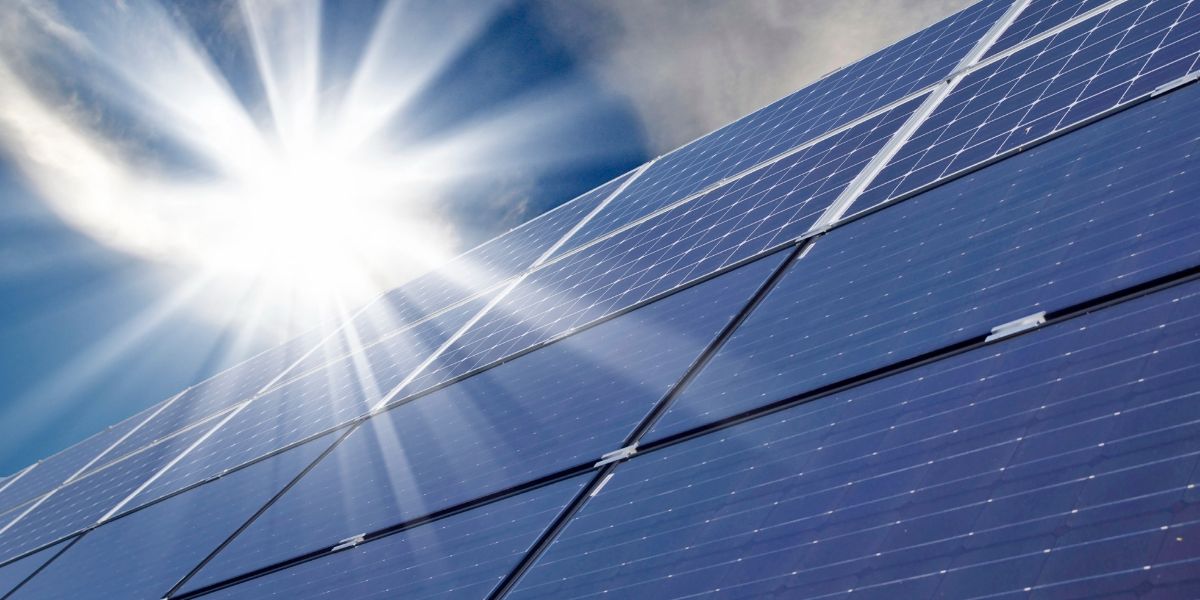
Frequently Asked Questions on Aluminum Electrolytic Capacitors
Below are authoritative technical answers addressing common procurement inquiries, engineering trade-offs, and search queries regarding aluminum electrolytic capacitor specification and supply chain management.
How does operating temperature impact the Arrhenius thermal lifetime calculation for Aluminum Electrolytic Capacitors?
Aluminum electrolytic capacitor lifetime follows the classic Arrhenius equation rule: operating the capacitor 10°C below its maximum rated ambient temperature doubles its expected operational lifetime. For example, a unit rated for 2,000 hours at 105°C operating at an ambient core temperature of 85°C will yield an estimated operational lifespan of approximately 8,000 hours. However, design calculations must account for internal ohmic self-heating (I²R losses) caused by high ripple currents, which elevate core temperatures above the surrounding ambient air.
What are the essential voltage derating guidelines for high-reliability industrial power applications?
For long-life industrial and medical equipment intended for 10-to-20-year operational lifespans, standard engineering practice dictates operating continuous DC bus voltages at 80% to 85% of the capacitor's nominal rated voltage. Derating significantly reduces dielectric stress on the ultra-thin aluminum oxide (Al2O3) insulation layer, lowers leakage currents, reduces internal gas generation within sealed aluminum cans, and provides safety margins against transient line surges.
How can procurement managers mitigate supply chain risks for specialized high-voltage screw terminal capacitors?
Mitigating supply chain risks requires establishing dual-sourcing validation during early prototyping, utilizing standardized terminal footprints (e.g., standard M5 or M6 thread pitch), and partnering with European technical stocking distributors such as eMergy Tech. Through direct technical alignment with high-capacity certified manufacturers like ZEASSET Electronic Technology, eMergy Tech establishes dedicated safety stock reserves in Italy, protecting clients against long global factory lead times.
What is the critical technical distinction between ESR and ESL in high-frequency power supply design?
Equivalent Series Resistance (ESR) represents the total real resistive losses (electrolyte resistance, aluminum foil, lead wires), governing heat generation when ripple current passes through the capacitor. Equivalent Series Inductance (ESL) represents parasitic inductance caused by internal foil winding turns and external terminal leads. In high-frequency SMPS (>100kHz), high ESL causes parasitic voltage spikes and limits high-frequency noise attenuation. Engineers must select low-ESL snap-in or multi-tab designs to maintain signal integrity.
What is the impact of long-term shelf storage on aluminum electrolytic capacitor re-passivation?
Unpowered storage exceeding 1 to 2 years can cause gradual degradation of the self-healing oxide dielectric layer due to chemical dissolution in liquid electrolytes. When un-conditioned capacitors are suddenly subjected to full rated voltage, excessive leakage current spikes can lead to thermal runaway. Proper procurement management requires sourcing factory-fresh stock or performing a current-limited voltage re-forming process prior to mounting stored units onto production assembly lines.
Why choose ZEASSET aluminum electrolytic capacitors via eMergy Tech over generic market components?
eMergy Tech provides localized European technical consulting, rigorous quality assurance, and direct engineering access to ZEASSET’s manufacturing facilities. Unlike unverified brokers, eMergy Tech verifies component lot traceability, delivers complete RoHS/REACH compliance documentation, assists in lifetime thermal modeling, and offers custom buffer inventory solutions tailored to European B2B manufacturing schedules.
Authorized European Distributor for ZEASSET Electronic Technology

Enterprise Strengths & Technical Value Proposition
Since 2011, eMergy Tech S.r.l. has served as Europe’s premier technical distributor and engineering consultant for advanced power supply systems and passive electronic components. Our value proposition is built upon four foundational pillars:
12+ Years Field Expertise
Established in Corsico (Milan, Italy), delivering technical consulting for industrial, railway, and renewable energy sectors.
Engineering Consultancy
Direct technical assistance in selecting, cross-referencing, and thermal modeling for aluminum electrolytic capacitors.
100% Certified Quality
Full compliance with European safety, EMC, RoHS, REACH, and ISO 9001 quality management protocols.
Localized Buffer Stock
JIT European warehouse delivery, custom safety stock programs, and direct drop-in replacement support.
B2B Direct Procurement & Consulting Assistance
Our specialized engineering team in Milan reviews circuit schematics, ripple current calculations, and mechanical constraints to ensure optimal capacitor selection. Contact our technical team today for direct RFQ processing, sample requests, and framework agreement negotiations.
Ready to Optimize Your Power Circuit?
Request Your Technical Quotation Today.
Whether you require standard snap-in capacitors, custom high-voltage screw terminal banks, or cross-reference selection support—our technical engineering team is ready to evaluate your bill of materials (BOM).